USMC PFT vs. Army ACFT, Navy PRT & Air Force Fitness Assessment
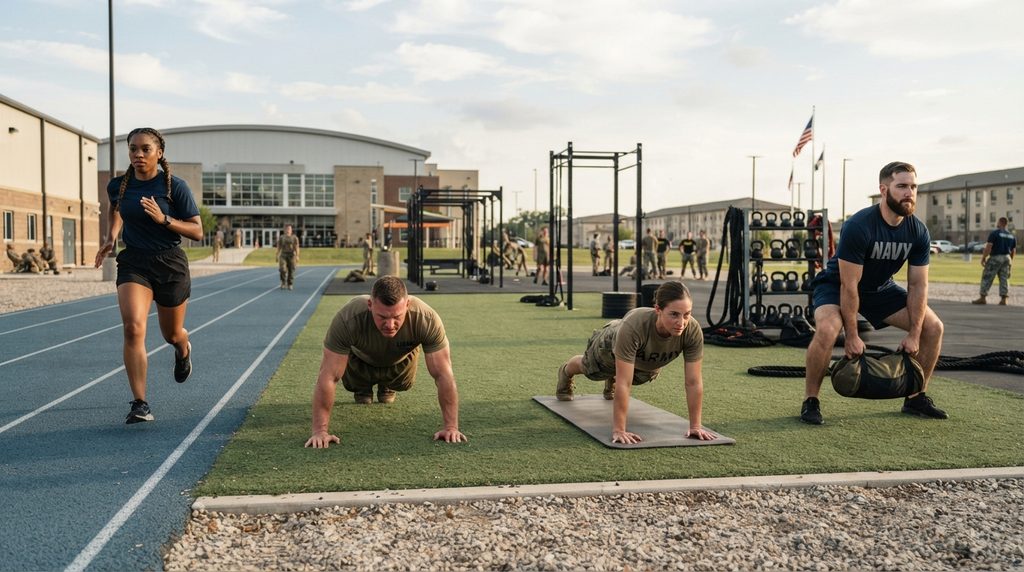
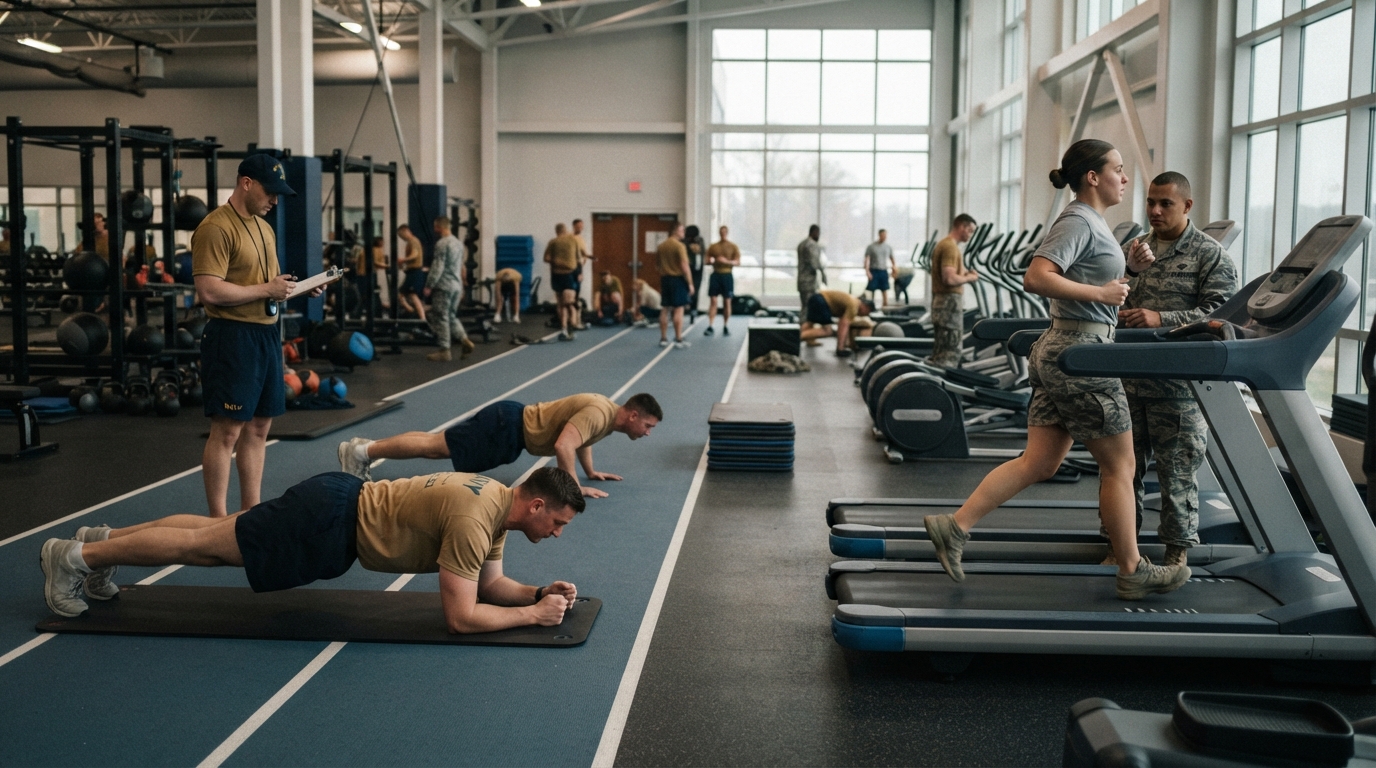
Every U.S. military branch has its own physical fitness requirements, but the tests are not interchangeable.
The Marine Corps PFT, Marine Corps CFT, Army ACFT, Navy PRT, and Air Force fitness assessment use different events, scoring systems, and testing philosophies.
Some tests emphasize running and muscular endurance. Others place more emphasis on strength, power, agility, or body composition.
Understanding those differences can be useful if you’re comparing military fitness standards, researching a potential branch transfer, or simply trying to understand how the Marine Corps PFT compares with the other services.
This guide focuses on the major differences between the services rather than attempting to rank one test as harder than another.
Last updated September 2026. Fitness policies can change, so verify current requirements with the applicable branch and your unit before testing.
Marine Corps PFT: The Baseline
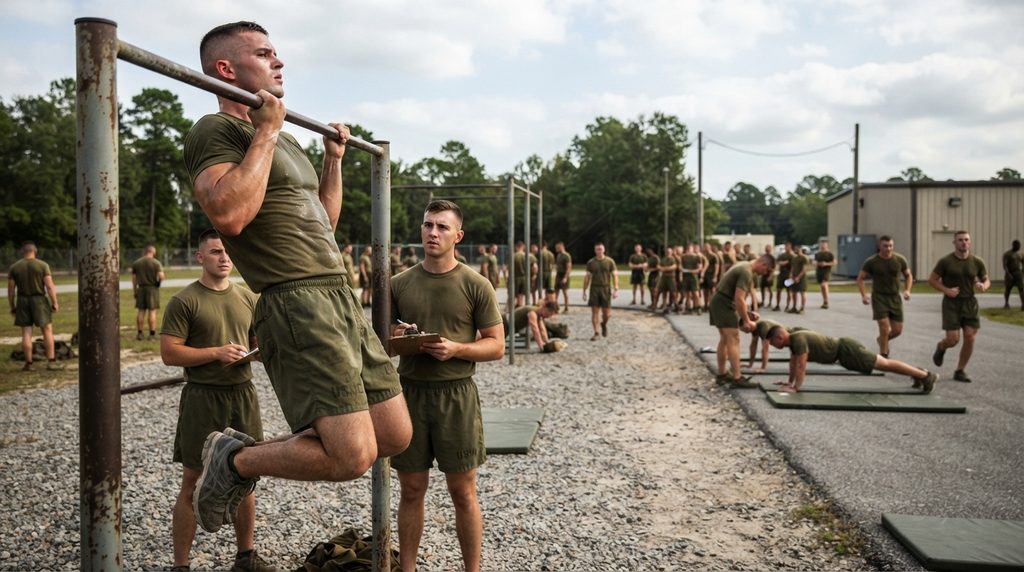
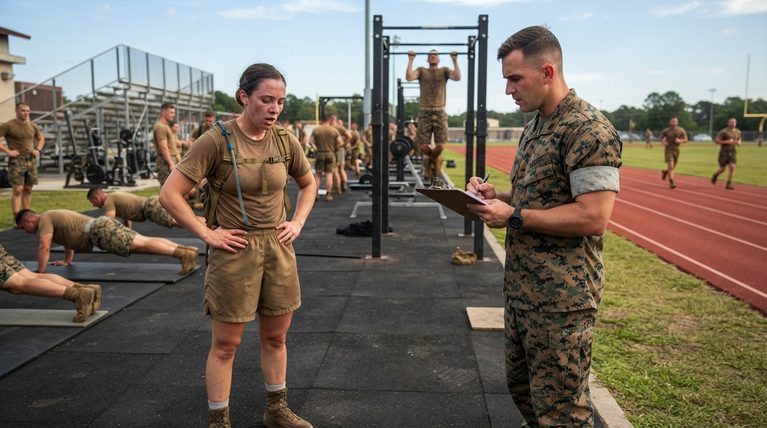
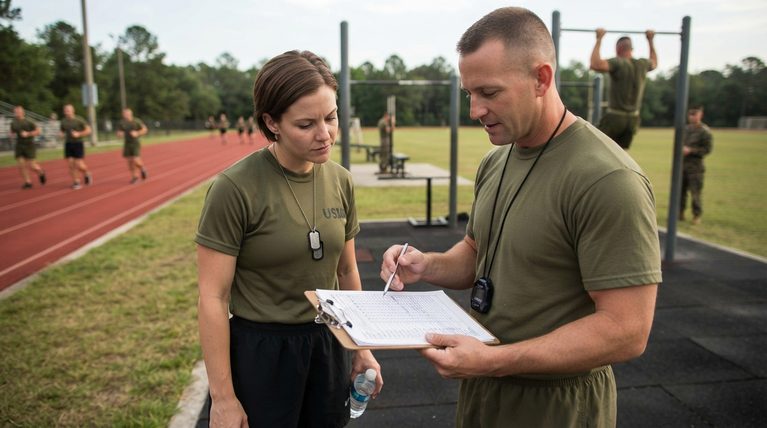
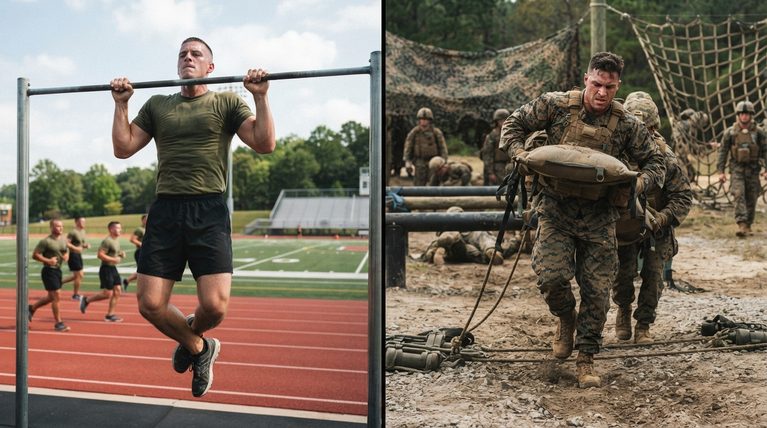
The Marine Corps Physical Fitness Test (PFT) is a three-event assessment designed to measure several areas of physical fitness.
Depending on the applicable standards, the PFT includes:
- Pull-ups or push-ups
- Plank
- 3-mile run or an approved rowing alternative
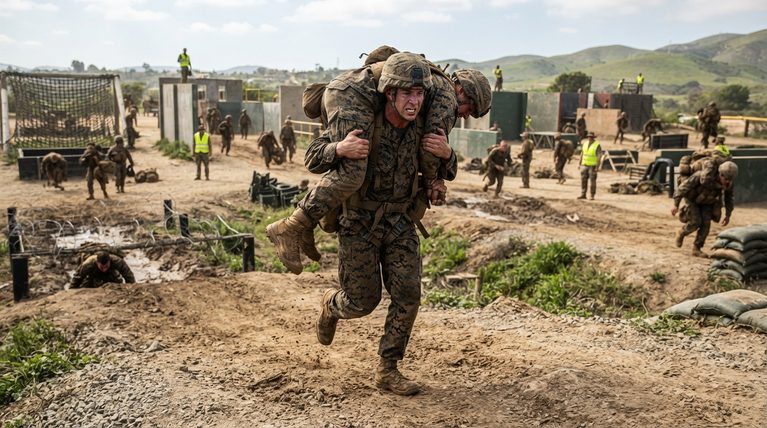
The Marine Corps also administers a separate Combat Fitness Test (CFT).
The CFT includes:
- Movement to Contact
- Ammunition Can Lift
- Maneuver Under Fire
This means the Marine Corps uses two separate assessments to measure general physical fitness and combat-oriented functional fitness.
The current governing publication is MCO 6100.13A W/ADMIN CH-5. (marines.mil)
Army ACFT: Six Events in One Test
The Army Combat Fitness Test (ACFT) takes a different approach.
The current ACFT consists of six events:
- 3-Repetition Maximum Deadlift
- Hand-Release Push-Up
- Sprint-Drag-Carry
- Plank
- Two-Mile Run
- Standing Power Throw
The test therefore combines strength, muscular endurance, anaerobic conditioning, core endurance, speed, and aerobic endurance in a single assessment.
The Army’s official ACFT guidance identifies these six events and provides the applicable scoring standards. (army.mil)
How the ACFT Differs From the Marine Corps PFT
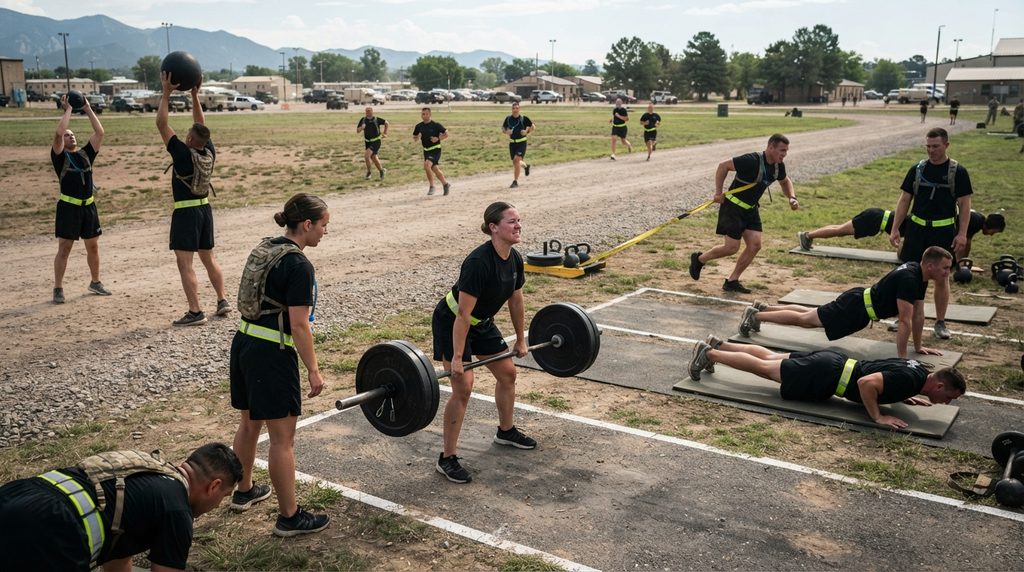
The biggest difference is the range of physical qualities tested in one assessment.
The Marine Corps PFT includes a traditional endurance-focused structure with running, upper-body endurance, and plank.
The ACFT adds movements that the Marine Corps PFT does not directly test, including:
- Heavy deadlifting
- Explosive power
- Sprint-drag-carry performance
- Hand-release push-ups
The Marine Corps CFT does include functional movement, but it is administered separately from the PFT.
Navy PRT: Fitness and Readiness
The Navy’s physical readiness program uses the Physical Readiness Test (PRT) as part of its overall physical readiness assessment.
The Navy’s current physical readiness requirements include components such as:
- Push-ups
- Forearm plank
- Cardiorespiratory endurance
The Navy provides multiple approved cardio options depending on the applicable testing standards and circumstances.
The Navy’s official Physical Readiness Program guidance should be used when checking the current event options and scoring requirements. (navy.mil)
How the Navy PRT Compares With the Marine Corps PFT
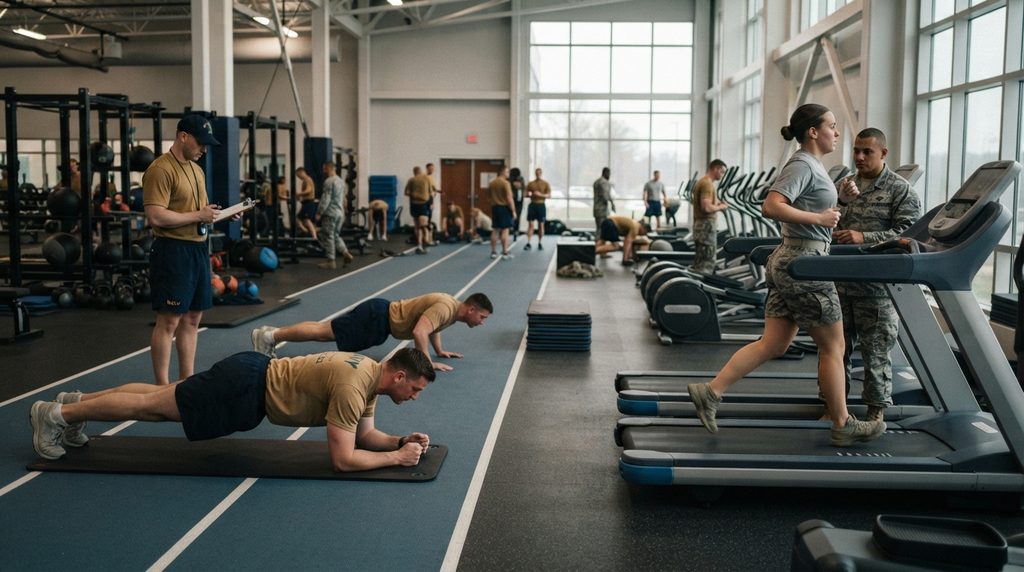
The Navy PRT and Marine Corps PFT have some obvious similarities.
Both include:
- A push-up event
- A plank
- A cardiovascular event
However, the exact event choices, scoring standards, and administrative requirements are different.
That means a Navy PRT score should not be treated as equivalent to a Marine Corps PFT score.
Air Force Fitness Assessment
The Air Force has also changed its fitness assessment structure over time.
The current Air Force fitness assessment includes components designed to evaluate:
- Cardiorespiratory endurance
- Muscular strength/endurance
- Core endurance
The Air Force also uses body-composition measurements as part of its fitness assessment framework.
The current Air Force fitness program provides different component options depending on the applicable assessment and member circumstances. Official Air Force guidance should be consulted for the current standards and scoring rules. (af.mil)
Important terminology note
You may see different names and abbreviations for Air Force fitness testing in older articles and online discussions.
For a current article, it is safer to refer to the Air Force fitness assessment unless you are specifically discussing an older or particular version of the test.
USMC PFT vs. Army ACFT vs. Navy PRT vs. Air Force Fitness Assessment
| Feature | USMC PFT | Army ACFT | Navy PRT | Air Force Fitness Assessment |
|---|---|---|---|---|
| Primary focus | General physical fitness | Strength, power, endurance & functional fitness | Physical readiness | Cardio, muscular fitness & body composition |
| Separate combat test | Yes — CFT | No separate CFT equivalent | No separate combat fitness test | No separate combat fitness test |
| Plank | Yes | Yes | Yes | Core event/options |
| Push-up-type event | Pull-ups or push-ups | Hand-release push-ups | Push-ups | Push-up options |
| Running | 3-mile run | 2-mile run | Cardio options | Cardio options |
| Heavy strength event | No | 3-rep max deadlift | No equivalent | No equivalent to ACFT deadlift |
| Explosive power event | No | Standing Power Throw | No equivalent | No equivalent to ACFT power throw |
| Functional movement course | CFT | Sprint-Drag-Carry | No separate equivalent | No separate equivalent |
| Body composition | Separate standard with performance-related allowances | Separate policy | Separate policy | Incorporated into fitness-assessment framework |
The table is intended as a high-level comparison. Individual branches have additional rules, alternative events, medical provisions, and scoring requirements.
The Biggest Difference: One Test vs. Two
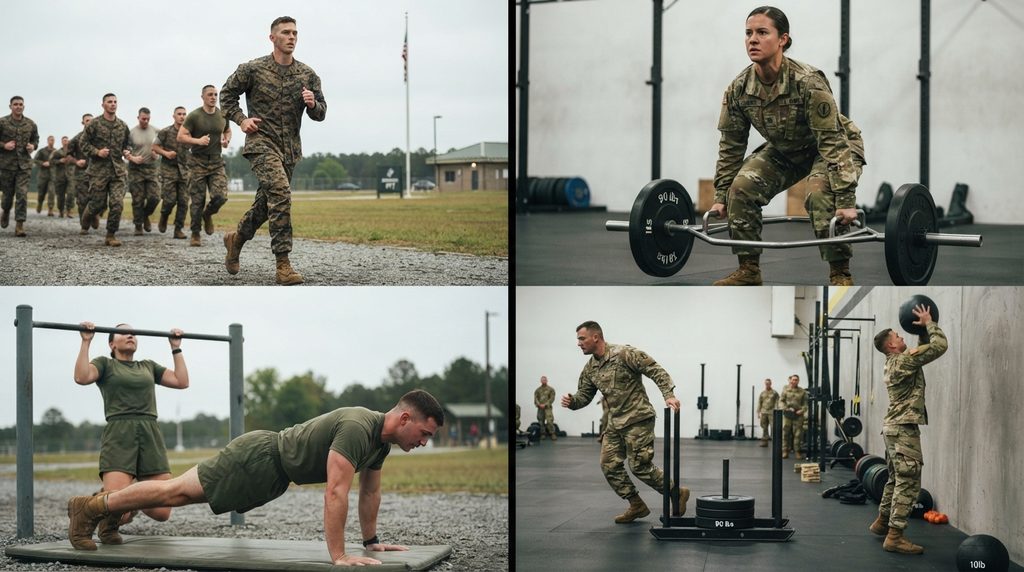
One of the most noticeable differences between the Marine Corps and the Army is how physical abilities are grouped.
Marine Corps
The Marine Corps separates the assessment into:
PFT → General physical fitness
CFT → Functional/combat-oriented fitness
This gives the Marine Corps two distinct tests rather than putting every fitness quality into one six-event assessment.
Army
The Army places six different events into the ACFT itself.
That means the ACFT can evaluate strength, power, muscular endurance, functional movement, core endurance, and aerobic endurance during one assessment.
Neither structure should automatically be interpreted as better or worse. They are simply different approaches to measuring physical readiness.
Strength Testing: USMC vs. Army
This is one of the clearest differences.
The Army ACFT includes the 3-Repetition Maximum Deadlift, which directly measures the ability to lift a heavy load.
The Marine Corps PFT does not include a maximum-strength lift.
The Marine Corps CFT does include the Ammunition Can Lift, but this is a repeated-lifting endurance event rather than a maximum-strength deadlift.
As a result, the two services test strength in substantially different ways.
Explosive Power: The Army Difference
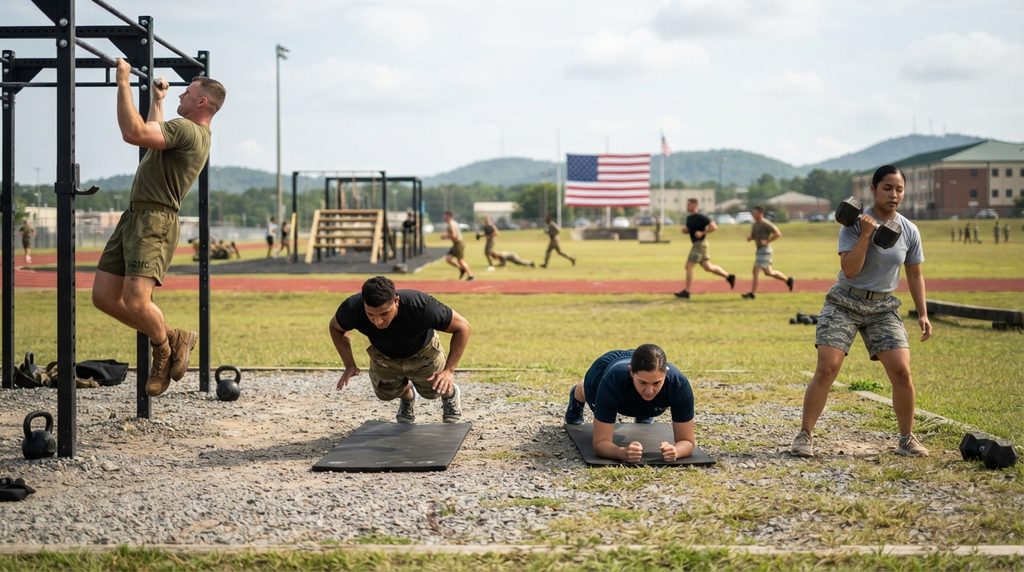
The ACFT includes the Standing Power Throw, which tests explosive power.
The Marine Corps PFT does not contain a direct equivalent.
The CFT tests speed and functional movement, but it does not use the Army’s standing power throw event.
This makes explosive power a more explicit component of the Army’s single fitness assessment.
Functional Movement: Marine Corps vs. Army
The Marine Corps CFT’s Maneuver Under Fire and the Army ACFT’s Sprint-Drag-Carry are both functional events, but they are not the same exercise.
Both require a combination of:
- Speed
- Acceleration
- Strength
- Coordination
- Movement under fatigue
But the specific movements, equipment, distances, and scoring procedures differ.
You therefore should not assume that training for one automatically prepares you for the other.
Cardio Events Are Also Different
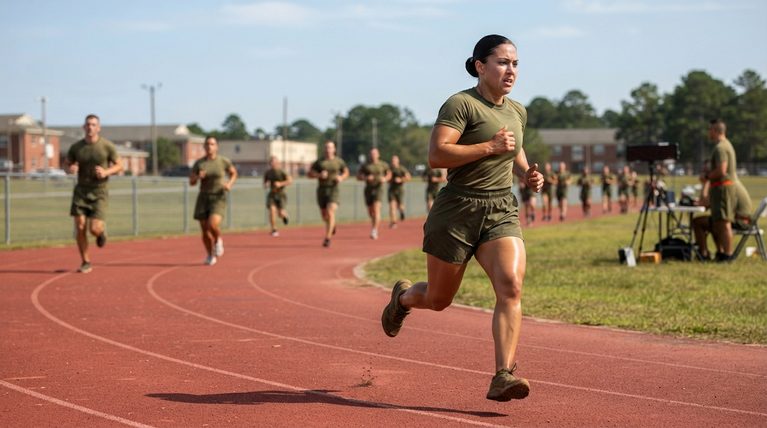
The Marine Corps PFT uses a 3-mile run as its primary running event.
The Army ACFT uses a 2-mile run.
The Navy PRT and Air Force fitness assessment provide their own approved cardiovascular options under their respective policies.
The distance alone does not determine which test is more demanding. Running speed, scoring standards, age categories, event alternatives, and the rest of the assessment all affect the overall experience.
Body Composition Is Handled Differently
Body composition is another area where the services use different approaches.
The Marine Corps generally treats body composition as a separate standard, while certain high PFT/CFT scores can affect applicable body-fat allowances.
Current Marine Corps guidance provides specific body-composition allowances for Marines who meet high-performance thresholds on both the PFT and CFT. (marines.mil)
The Air Force, by comparison, incorporates body-composition measurement into its broader fitness-assessment framework.
This is an important difference when comparing the philosophy behind the tests.
Does One Test Score Transfer to Another Branch?
No.
A Marine Corps PFT score does not become an Army ACFT score simply because the Marine transfers to the Army.
Likewise, an Army ACFT result does not become a Navy PRT score.
Each branch maintains its own:
- Events
- Scoring tables
- Standards
- Testing procedures
- Administrative requirements
If a service member changes branches, they must follow the fitness requirements applicable to their new service.
Are the Tests Comparable?
They are comparable in terms of what physical qualities they attempt to measure, but the scores themselves are not directly interchangeable.
For example:
A Marine may have excellent performance in the PFT’s 3-mile run.
That does not tell you how the same Marine would perform on the Army’s 3-repetition deadlift.
Likewise, a strong ACFT deadlift score does not directly predict performance on the Marine Corps PFT pull-up event.
Each test creates a different physical profile.
Frequently Asked Questions
Is the Marine Corps PFT harder than the Army ACFT?
There is no objective one-to-one answer.
The tests measure different physical qualities and use different scoring systems.
The ACFT includes heavy strength and explosive-power events that are not part of the Marine Corps PFT, while the Marine Corps uses a separate CFT to assess combat-oriented functional movement.
Does the Navy have a CFT like the Marine Corps?
No separate Navy test directly equivalent to the Marine Corps CFT is part of the Navy’s standard physical readiness testing structure.
The Navy uses its Physical Readiness Program and PRT rather than maintaining a second combat-specific fitness test alongside the PRT.
Does the Air Force have a test like the Marine Corps CFT?
The Air Force does not use a separate CFT equivalent as part of its standard fitness assessment structure.
Its fitness assessment focuses on the applicable cardiovascular, muscular, core, and body-composition components.
Does the Army ACFT include a plank?
Yes.
The plank is one of the six ACFT events. (army.mil)
Does the Army ACFT include a deadlift?
Yes.
The ACFT includes a 3-Repetition Maximum Deadlift. (army.mil)
Is the Marine Corps CFT part of the PFT?
No.
The PFT and CFT are separate Marine Corps assessments.
Can I compare my Marine PFT score directly with an Army ACFT score?
No.
The scoring systems and event structures are different, so there is no simple score-to-score conversion.
Which test has more events?
The Army ACFT has six events in one assessment.
The Marine Corps uses three PFT events plus three separate CFT events, but the PFT and CFT are administered as separate assessments.
Does the Navy PRT use a plank?
Yes. The forearm plank is part of the Navy’s physical readiness testing framework.
Does every branch use the same fitness standards?
No.
Each military service establishes its own physical fitness requirements and updates them through its own policies and regulations.
What This Means for Marines
If your goal is to improve your Marine Corps PFT or CFT score, studying another branch’s fitness test can provide useful context, but it should not replace training for the actual Marine Corps events.
A Marine preparing for the PFT should focus on:
- Pull-ups or push-ups
- Plank
- 3-mile running performance
- Applicable PFT scoring standards
A Marine preparing for the CFT should focus on:
- Movement to Contact
- Ammunition Can Lift
- Maneuver Under Fire
Your training should ultimately match the test you are preparing to take.
Check Your Marine Corps Score
Other branches use different fitness tests, but your score is determined by the standards that apply to you.
Use the USMC PFT Calculator on this website to calculate your Marine Corps PFT score.
If you’re preparing for the CFT, use the USMC CFT Calculator to calculate your event scores and overall CFT result.
Always verify the latest official standards before an official military fitness test because service fitness policies can change.
Related USMC Fitness Guides
- USMC PFT vs. CFT: What’s the Difference and Why You Need Both?
- USMC PFT Standards by Age and Gender
- USMC PFT and CFT Minimum Score Requirements
- USMC Plank Standards: How the Plank Replaced the Crunch
- CFT Events Explained: Movement to Contact, Ammo Can Lift, and Maneuver Under Fire
- USMC PFT Calculator
- USMC CFT Calculator