How to Improve Your PFT Score: A Practical Guide by Event
Learn how to improve your PFT score with practical tips for pull-ups, push-ups, plank, and the 3-mile run. Build a smarter Marine fitness plan. Once you know your current PFT score, the next question is simple:
How can you improve it?
The answer is not necessarily to train harder across every event.
A better approach is to identify which event is limiting your total score and then direct your training toward that weakness. Your current score profile, applicable Marine Corps scoring standards, age, and PMOS all matter when deciding where additional training will have the greatest value.
For Marines preparing for the PFT, the goal should be to improve the events that have the most room for progress while maintaining the performance you’ve already built.
Last updated September 2026. Current Marine Corps PFT standards can change, so verify your applicable requirements before testing.
Start With Your Weakest Event
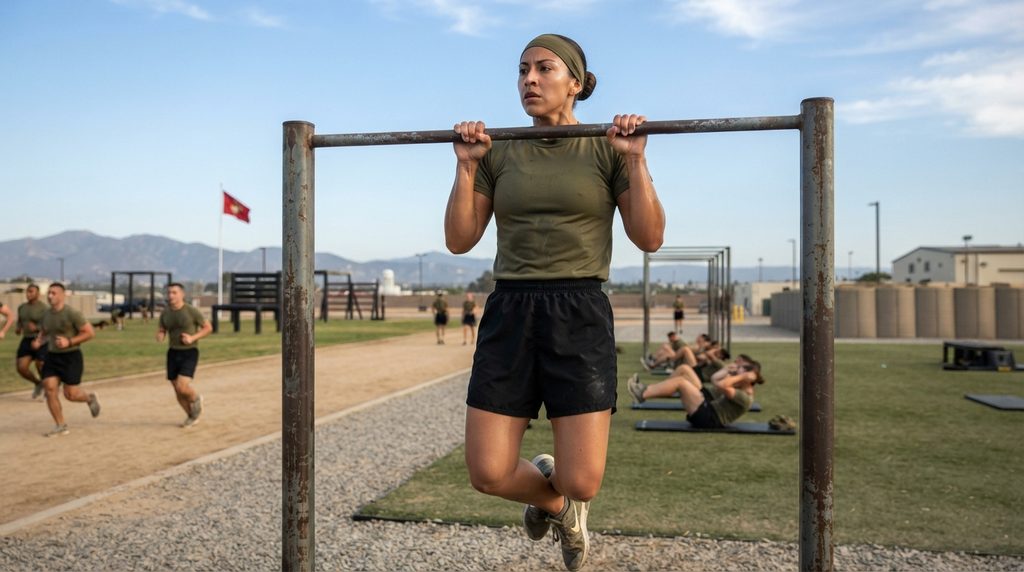
One of the most useful ways to improve a PFT score is to look at your individual event scores, rather than focusing only on the total.
If one event is significantly lower than the others, improving that event may have a larger effect on your total than spending additional training time on an event where you are already performing strongly.
For example, imagine a Marine has:
- Upper-body event: 90 points
- Plank: 65 points
- Run: 75 points
In this example, the plank has substantially more room for improvement than the upper-body event.
That does not mean you should completely stop training your strongest event. You still need to maintain it.
Instead, you can shift more training attention toward the area that is currently limiting your score.
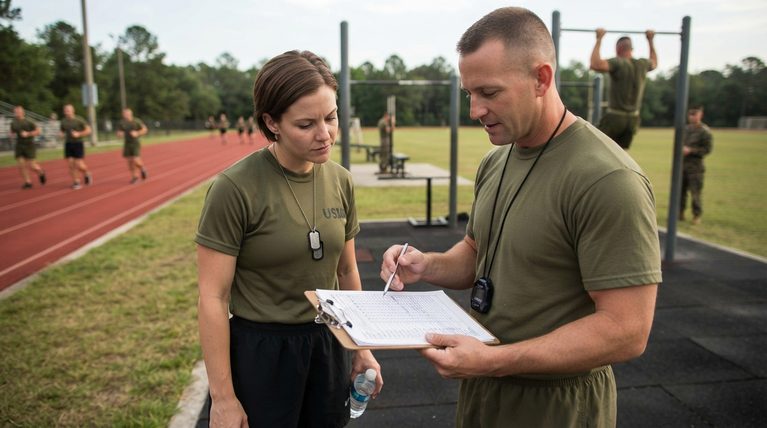
Use Your Calculator to Find the Biggest Opportunity
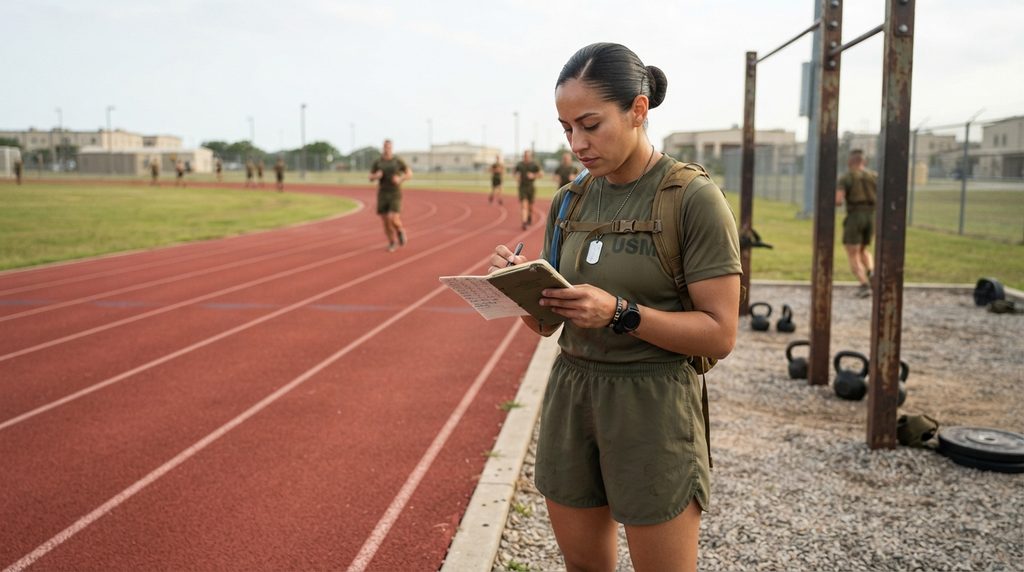
Before changing your training program, run your current numbers through the PFT calculator.
Then test realistic improvements individually.
For example:
- What happens if you add 3 pull-ups?
- What happens if your plank improves by 20 seconds?
- What happens if you reduce your 3-mile time by 30 seconds?
Comparing these scenarios can show you where additional effort could have the greatest effect on your score.
This is more useful than simply assuming that your hardest event is automatically the one you need to train most.
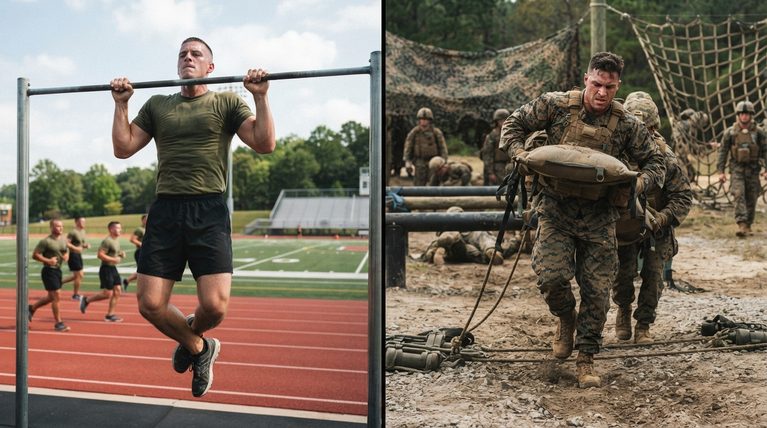
Improving Pull-Ups
Pull-ups can provide substantial scoring potential under applicable Marine Corps scoring tables.
If pull-ups are your chosen upper-body event, focus on building both strength and repetition endurance.
Useful training methods can include:
Assisted Pull-Ups
Bands or an appropriate assisted-pull-up machine can help you practice the movement while gradually building strength.
Negative Pull-Ups
Start from the top position and lower yourself under control.
This can help develop the strength required for full repetitions.
Dead Hangs
Dead hangs can help develop grip endurance, which is useful for Marines whose grip becomes a limiting factor during pull-up training.
Submaximal Sets
Instead of performing maximum repetitions every session, use multiple controlled sets that leave some repetitions in reserve.
This allows you to accumulate quality repetitions while managing fatigue.
Practice Strict Technique
Your training repetitions should resemble the movement standard used during the official PFT.
Practicing questionable repetitions in training can create problems when an official monitor evaluates your performance.
Improving Push-Ups
If push-ups are your chosen event, consistency and technique are important.
Focus on:
- Controlled repetitions
- Consistent range of motion
- Maintaining body alignment
- Building muscular endurance
- Practicing the official movement standard
One useful approach is to perform multiple submaximal sets during the week rather than repeatedly testing your absolute maximum.
The goal is to make your required test pace feel sustainable.
Should You Switch From Push-Ups to Pull-Ups?
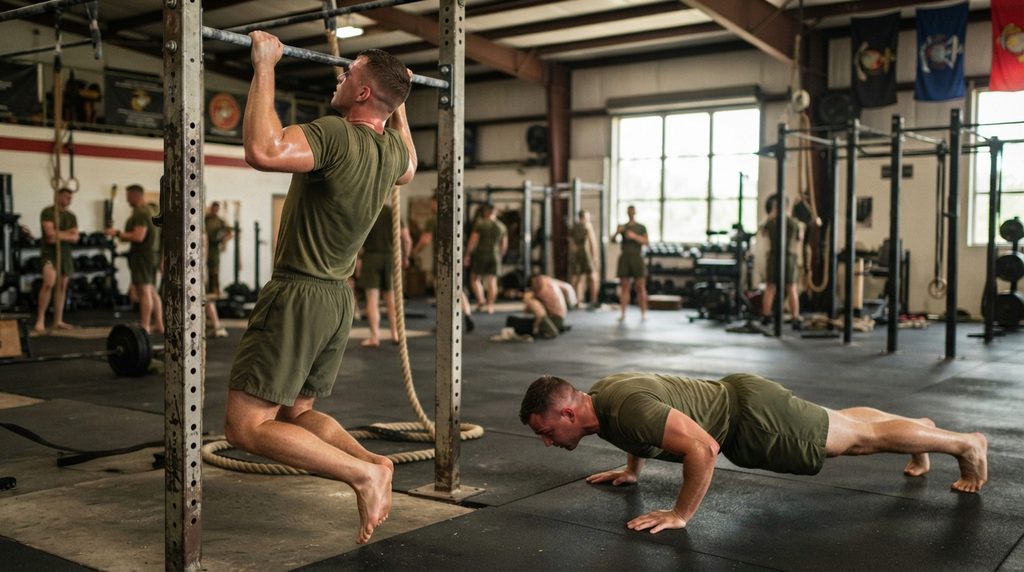
This depends on your current performance and the applicable scoring table.
Pull-ups have a higher potential point ceiling than push-ups under the standard scoring structure, so developing pull-up ability can provide additional scoring opportunity.
However, switching events immediately is not automatically the right choice for every Marine.
Consider:
- Your current push-up score
- Your current pull-up ability
- How much time you have before your PFT
- Your applicable scoring standard
- Your ability to train the new movement consistently
If you already score very well on push-ups, developing pull-ups over a longer training period may provide more room for future improvement.
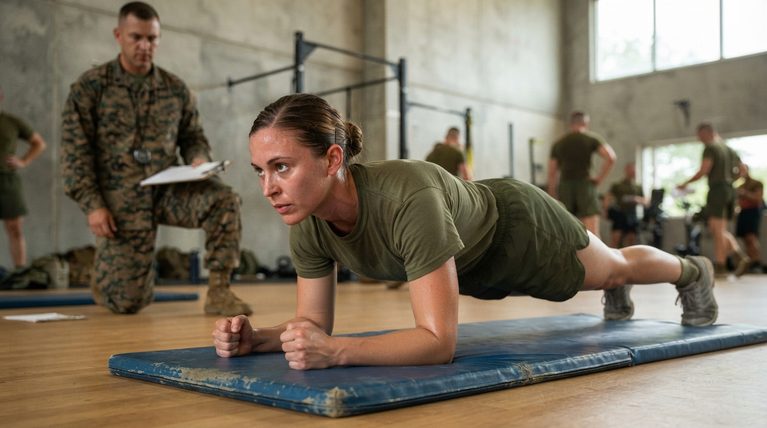
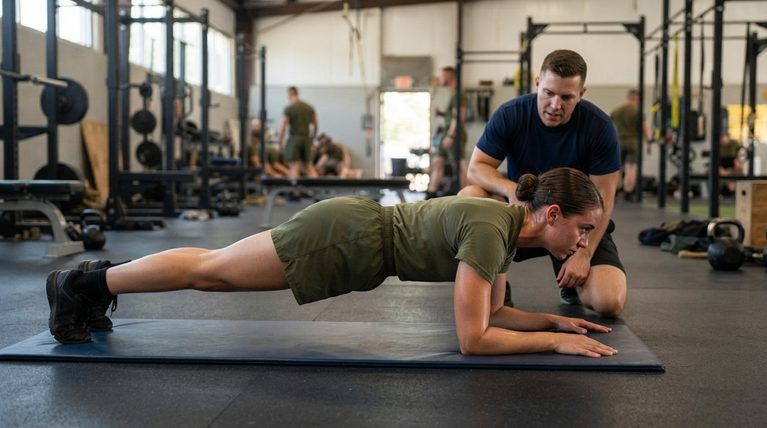
Improving Your Plank
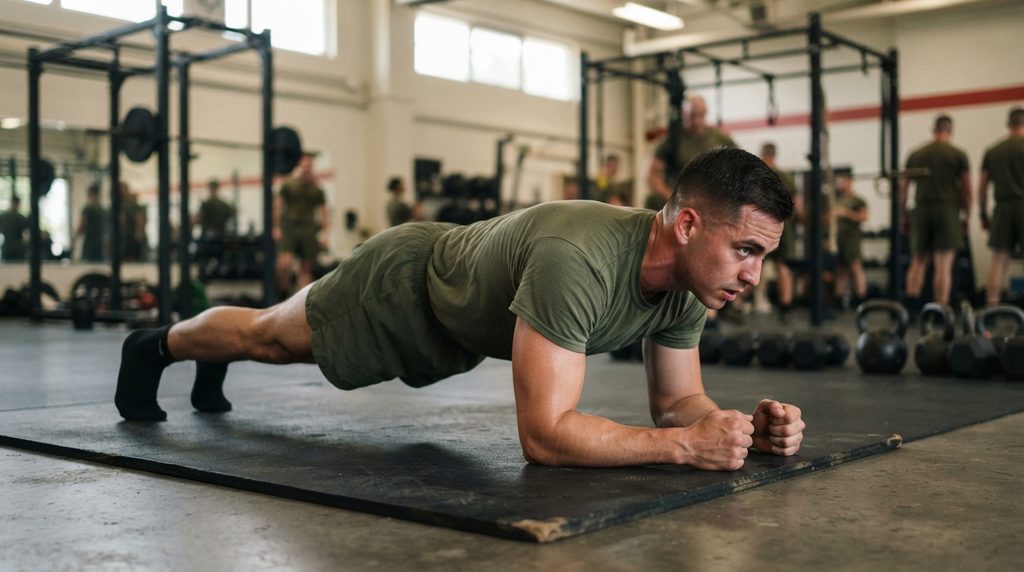
The plank is an endurance and positioning challenge.
The current Marine Corps plank scoring table is age- and sex-neutral, so the same plank time corresponds to the same score under the applicable current table. The current scoring range runs from 1:10 for 40 points to 3:45 for 100 points.
That makes improving your plank less about chasing a particular age- or sex-specific target and more about improving your ability to maintain the required position.
Focus on Form First
A longer hold is useful only if you can maintain the required position.
During training, pay attention to:
- Hip position
- Shoulder position
- Straight body alignment
- Controlled breathing
- Maintaining tension throughout the trunk
Increase Time Gradually
Rather than testing your maximum plank every day, gradually increase your working time.
For example, you can use several controlled sets and progressively increase their duration as your endurance improves.
Add Complementary Core Training
Exercises such as:
- Side planks
- Dead bugs
- Bird dogs
- Loaded carries
- Anti-rotation exercises
can complement direct plank practice.
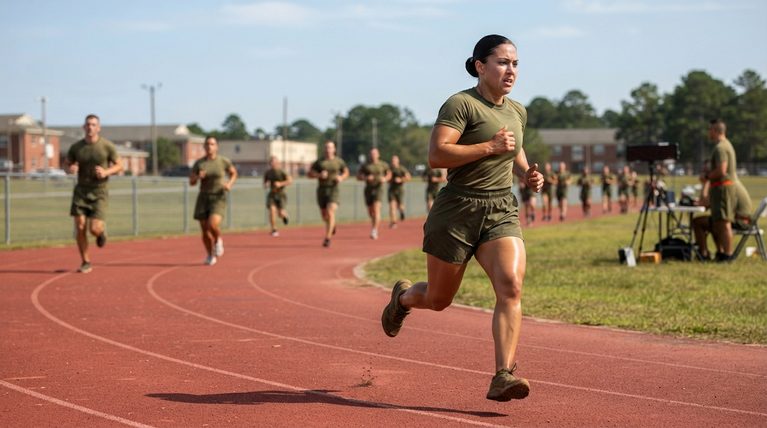
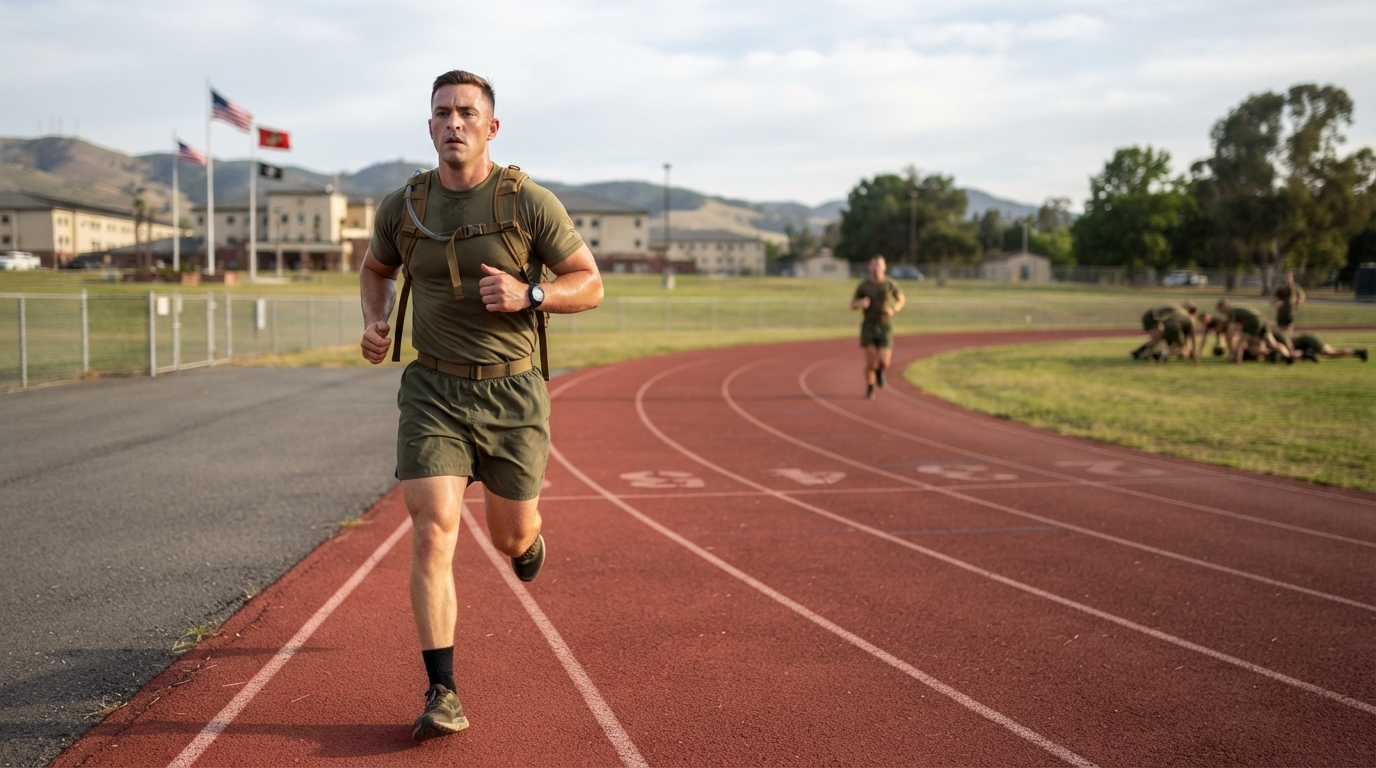
Improving Your 3-Mile Run
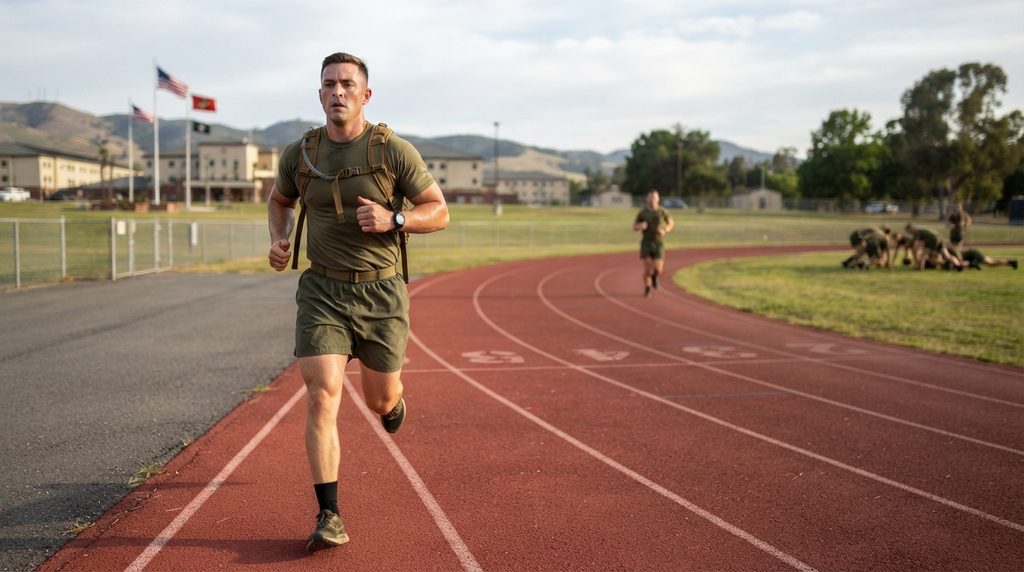
Improving your run usually requires consistency rather than constant maximum-effort running.
A balanced running program can include different types of work.
Easy Running
Easy-paced running helps develop your aerobic base while allowing you to accumulate training volume without excessive fatigue.
Faster Running
Intervals or controlled faster efforts can help improve speed and running efficiency.
Test-Pace Practice
As your PFT approaches, include some running at or around your target PFT pace so you become familiar with the required effort.
Recovery
Recovery is part of training.
Trying to run every session at maximum intensity can create unnecessary fatigue and may make it harder to maintain consistent training.
What About the 5K Row?
Some Marines may be eligible for the approved rowing alternative under Marine Corps standards.
If you are using the row rather than the 3-mile run, technique matters.
Efficient rowing technique can help you use your available fitness more effectively.
Focus on:
- Consistent stroke mechanics
- Controlled pacing
- Proper sequencing
- Maintaining a sustainable effort
If your row performance is significantly worse than expected compared with your general fitness, technique may be one area worth reviewing.
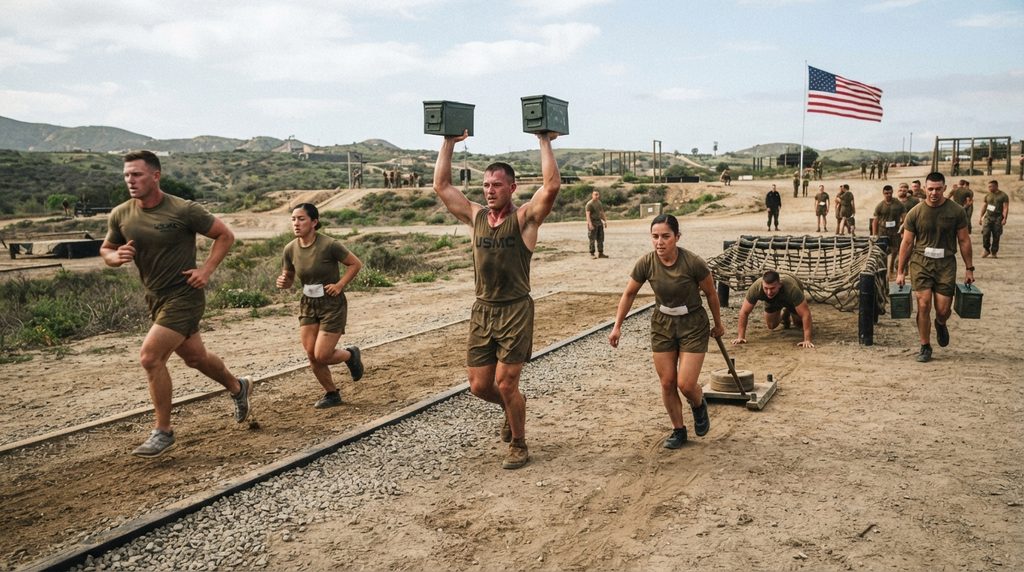
Improving the CFT
The CFT requires a different preparation strategy from the PFT.
The Marine Corps CFT includes:
- Movement to Contact
- Ammunition Can Lift
- Maneuver Under Fire
Because these events test different physical qualities, CFT-specific training should complement your normal PFT preparation.
Improving Movement to Contact
Movement to Contact is an 880-yard run performed under the prescribed CFT conditions.
Training should develop both running speed and the ability to perform effectively in the footwear and uniform used during the test.
This can include:
- Shorter fast runs
- Intervals
- Acceleration work
- Running-specific conditioning
- Appropriate familiarization with CFT footwear and uniform
You do not necessarily need to perform every training run in boots. A combination of normal running and appropriate event-specific practice can help you develop speed while becoming familiar with the actual test conditions.
Improving the Ammunition Can Lift
The Ammo Can Lift is a repeated-lifting endurance event.
The goal is not simply to become better at one heavy overhead lift.
You need to maintain repeated movement for the prescribed testing period.
Useful training can include:
- Overhead pressing
- Moderate-load repetitions
- Shoulder endurance
- Triceps endurance
- Core stabilization
- Event-specific pacing
Avoid turning every practice session into an all-out test.
Learning to maintain a sustainable repetition rhythm can be particularly useful because starting too aggressively may cause your repetition rate to drop later in the event.
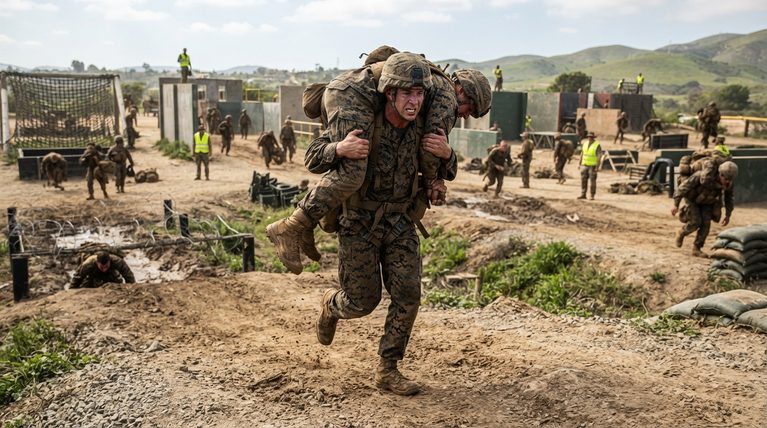
Improving Maneuver Under Fire
Maneuver Under Fire combines multiple physical movements into one timed event.
That means general strength and conditioning are useful, but movement efficiency matters too.
Training can include:
- Crawling
- Carrying
- Dragging
- Sprinting
- Direction changes
- Acceleration and deceleration
- Practicing transitions between movements
If you have access to an appropriate training environment, practicing the actual sequence can help reduce hesitation between stations.
Don’t Train Only Your Strongest Event
A common mistake is spending most of your training time on the event you already enjoy or perform well.
That feels productive, but it may not produce the largest improvement in your overall score.
Instead:
Maintain your strengths. Develop your weaknesses.
If your run is already strong but your plank is significantly weaker, adding more and more running may not be the most efficient way to improve your overall PFT score.
Don’t Chase Points Beyond the Applicable Maximum
Once an event reaches its applicable scoring ceiling, additional performance in that event does not increase the total score.
For example, under the current standard structure, the plank has a maximum score of 100 points, while push-ups have a lower maximum point value.
This makes score optimization different from simply maximizing every physical performance metric.
Your goal should be to improve the score, not necessarily to achieve the highest possible number of repetitions or the longest possible hold in every event.
How Long Does It Take to Improve a PFT Score?
There is no universal timeline.
Your rate of improvement depends on:
- Starting fitness level
- Training history
- Age
- Recovery
- Training consistency
- Which event you are trying to improve
- How much room exists between your current score and the next scoring level
A Marine with a major technical weakness may see noticeable improvement relatively quickly.
A Marine already performing at a high level may need considerably more time to gain a few additional points.
That is why a training cycle should be based on your current numbers rather than someone else’s results.
Why Last-Minute PFT Training Usually Doesn’t Work
Trying to transform your PFT score in the final week or two is usually unrealistic.
Strength and aerobic adaptations take time.
A last-minute training surge can also leave you fatigued when you actually need to perform.
Instead, use the calculator early in your training cycle.
Identify your weakest event, establish a realistic target, and gradually build toward it.
A Simple PFT Improvement Strategy
You can organize your preparation into four steps.
Step 1: Calculate Your Current Score
Enter your current performance into the calculator.
Step 2: Identify Your Weakest Event
Look at both your points and your actual performance.
Step 3: Test Different Scenarios
Estimate how your total changes if you improve each event.
Step 4: Build Training Around the Biggest Opportunity
Maintain your strongest event while giving additional attention to the event with the most realistic scoring upside.
This creates a more targeted training strategy than simply increasing total workout volume.
Frequently Asked Questions
Which PFT event should I improve first?
Usually, start by identifying the event that is both relatively weak and realistically improvable.
Use your current calculator results to compare potential gains rather than assuming the answer is the same for every Marine.
Is it better to train my weakest or strongest event?
If your strongest event is already near its applicable scoring ceiling, additional improvement may have limited scoring value. In that situation, bringing up a weaker event may have a larger effect on your total.
Should I train PFT and CFT events at the same time?
You can maintain both throughout the year, but your training emphasis can shift as the applicable testing period approaches.
PFT and CFT events require different physical qualities, so PFT-only training may leave gaps when preparing for the CFT.
Should I do maximum-effort tests every week?
Not necessarily.
Frequent maximum tests can create unnecessary fatigue. Most training should develop the underlying fitness qualities, with periodic test-specific assessments to measure progress.
How can I improve my pull-ups?
Use a combination of assisted pull-ups, negatives, dead hangs, controlled repetitions, and progressive pulling-strength work.
How can I improve my plank time?
Practice the plank regularly while maintaining correct form, gradually increase your hold duration, and supplement it with exercises that develop trunk stability.
How can I improve my 3-mile run time?
Build an aerobic base with consistent running, add appropriate faster work, and practice your target pace as your test approaches.
How can I improve my CFT score?
Train each CFT event specifically. Running can help Movement to Contact, repeated overhead lifting can help the Ammo Can Lift, and direct practice of functional movement patterns can help with Maneuver Under Fire.
Does the 2026 combat-arms rule affect how I should train?
Yes, if you are in a designated combat-arms PMOS.
Beginning January 1, 2026, combat-arms Marines use the male, age-normed PFT scoring standard and must achieve a minimum total PFT score of 210 points. Non-combat-arms Marines continue to use the existing sex- and age-normed standards.
Find Your Weakest Event
Your first step should not be adding more workouts.
It should be understanding your current score.
Use the USMC PFT Calculator on this website to calculate your individual event scores and overall result.
Then test a few realistic improvements:
- More pull-ups or push-ups
- A longer plank
- A faster run
- Improved CFT performance
This gives you a clearer picture of where your training time may have the greatest impact.
For official testing, always verify your applicable standards against the latest Marine Corps guidance and your unit’s instructions.
Related USMC Fitness Guides
- USMC PFT Calculator: Calculate Your Score
- USMC PFT Standards by Age and Gender
- USMC PFT and CFT Minimum Score Requirements
- USMC Plank Standards: How the Plank Replaced the Crunch
- CFT Events Explained: Movement to Contact, Ammo Can Lift, and Maneuver Under Fire
- PFT vs. CFT: What’s the Difference and Why You Need Both?
- USMC PFT Standards for Female Marines