USMC Plank Standards: How the Plank Replaced the Crunch
If you learned the Marine Corps Physical Fitness Test (PFT) before 2023, you may remember the abdominal crunch as the core event.
That is no longer the case.
The plank is now the only authorized core event on the Marine Corps PFT. The change was introduced in stages: the Marine Corps first added the plank as an alternative to crunches, then adjusted its scoring standards, and finally made the plank mandatory beginning January 1, 2023.
If you are using an older PFT chart, it is important to know which version of the standards you are looking at.
The current Marine Corps publication governing the PFT and CFT is MCO 6100.13A W/ADMIN CH-5.
The Short Version
The Marine Corps adopted the plank as an alternative to the abdominal crunch in 2020. Beginning January 1, 2023, the plank became mandatory and crunches were no longer authorized for the PFT.
The current plank scoring range is:
- 1:10 = 40 points
- 3:45 = 100 points
- Times between those points receive scores according to the official scoring table.
- The plank scoring table is age- and sex-neutral.
The current official table assigns the same plank time-to-score relationship regardless of age or sex.
That makes the plank different from several other PFT events, where age- and sex-specific scoring tables apply.
Why Did the Marine Corps Replace Crunches With the Plank?
The Marine Corps introduced the plank to assess core stability, strength, and endurance while reducing some of the concerns associated with repetitive abdominal crunches.
According to the Marine Corps Human Performance Branch, research indicated that restrained-foot crunches involve significant hip-flexor activation and repetitive lumbar flexion. The Marine Corps identified the plank as an exercise that provides greater emphasis on overall core stability and endurance.
The plank is also an isometric exercise. Instead of repeatedly flexing the trunk, the Marine maintains a stable position while resisting movement.
This makes the exercise particularly relevant to developing the ability to maintain trunk stability during physically demanding activities.
When Did the Plank Replace the Crunch?
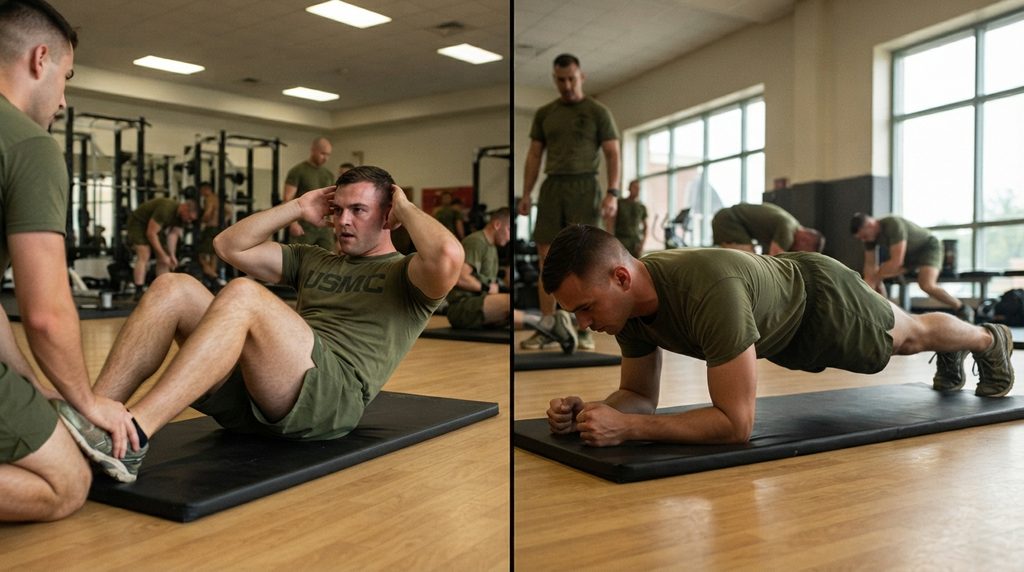
The transition happened over several years.
2020: Plank Introduced as an Alternative
In 2020, the Marine Corps introduced the plank as an alternative to the abdominal crunch for the PFT.
At that point, Marines could choose between the two core events under the applicable standards.
2022: Plank Scoring Changed
Beginning January 1, 2022, the plank scoring window was adjusted.
The time required for maximum points changed from 4:20 to 3:45, while the minimum time for points changed from 1:03 to 1:10.
Importantly, this was a change to the plank scoring standard, not the date when crunches were eliminated.
2023: Plank Became Mandatory
Beginning January 1, 2023, the plank became mandatory and the abdominal crunch was no longer authorized as a PFT option.
So there are three important dates to remember:
| Year | Change |
|---|---|
| 2020 | Plank introduced as an alternative to crunches |
| 2022 | Plank scoring window changed to 1:10–3:45 |
| 2023 | Plank became mandatory; crunches removed |
Current USMC Plank Standards
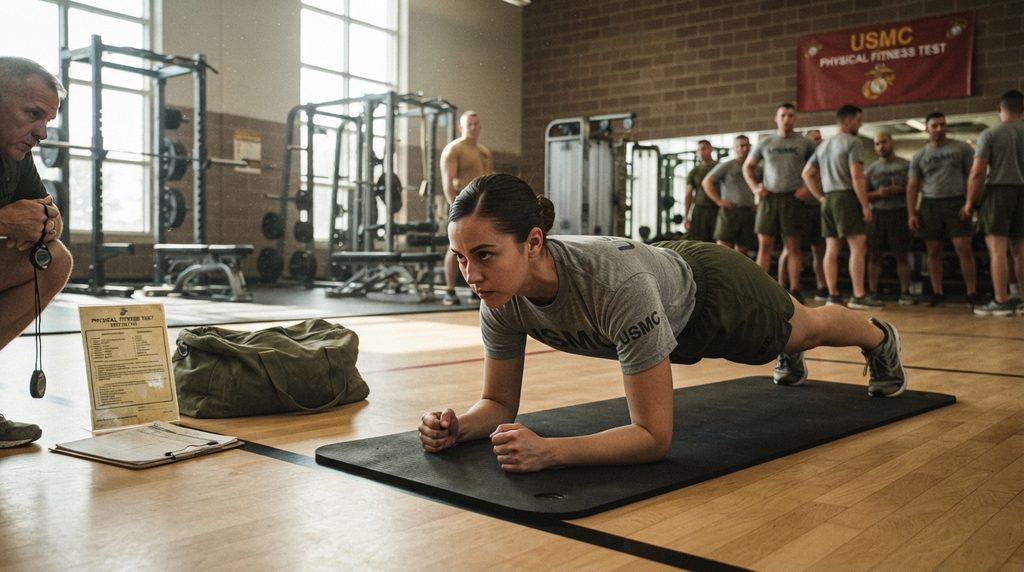
The current plank scoring table runs from 1:10 for 40 points to 3:45 for 100 points.
Unlike many other PFT events, the plank uses one scoring table for all Marines rather than separate age- and sex-based plank tables.
Current scoring examples
| Plank Time | Score |
|---|---|
| 3:45 | 100 |
| 3:30 | 94 |
| 3:20 | 90 |
| 3:00 | 83 |
| 2:30 | 70 |
| 2:00 | 59 |
| 1:45 | 53 |
| 1:30 | 48 |
| 1:15 | 42 |
| 1:10 | 40 |
These are examples from the current official plank scoring table. The complete table includes scoring increments throughout the range from 40 through 100 points.
Maximum plank score
3 minutes and 45 seconds = 100 points
Holding the plank longer than 3:45 does not increase the score beyond 100 points.
Minimum scored time
1 minute and 10 seconds = 40 points
The plank event therefore has a defined minimum scoring time and a maximum scoring time.
Is the USMC Plank Standard Different by Age or Gender?
No.
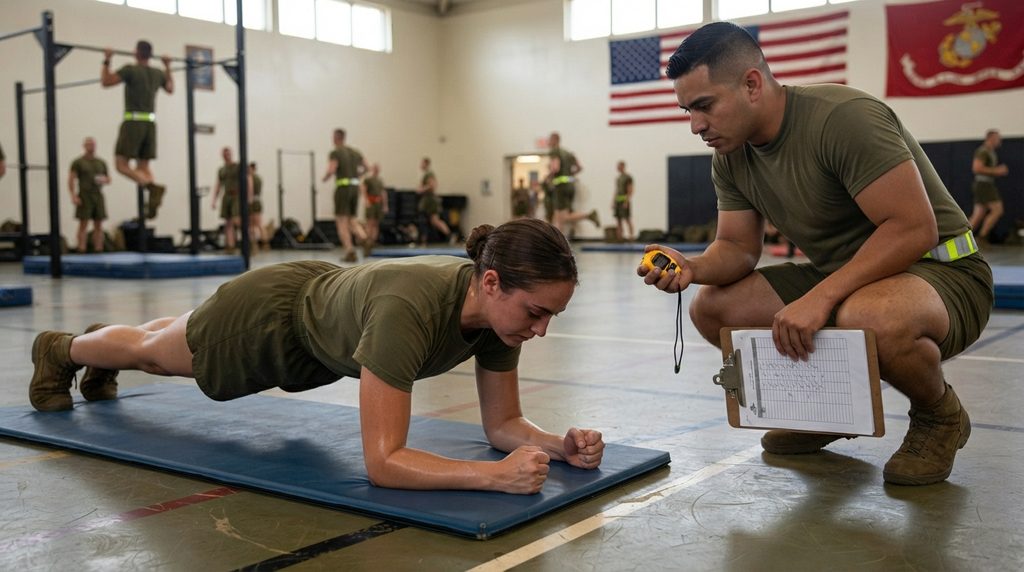
This is an important distinction between the plank and other PFT events.
The current Marine Corps plank scoring table is age- and sex-neutral. In other words, the same plank time corresponds to the same plank score regardless of the Marine’s age or sex.
For example:
- A 20-year-old Marine holding 3:00 receives the same plank score as
- A 35-year-old Marine holding 3:00, or
- A 45-year-old Marine holding 3:00,
assuming the official testing conditions are met.
This makes the plank scoring system relatively straightforward to calculate.
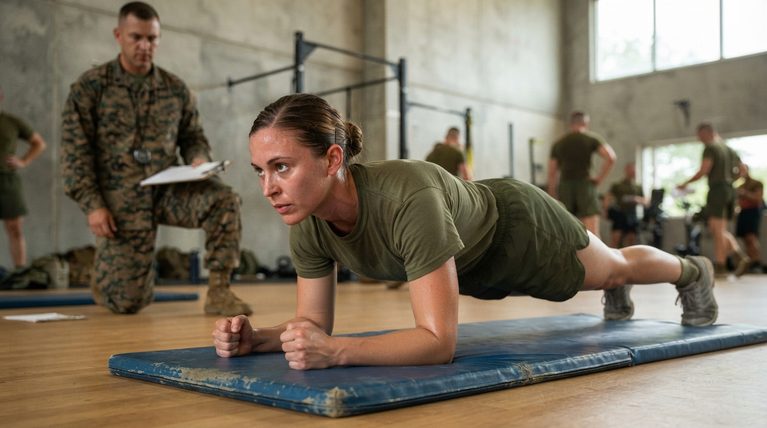
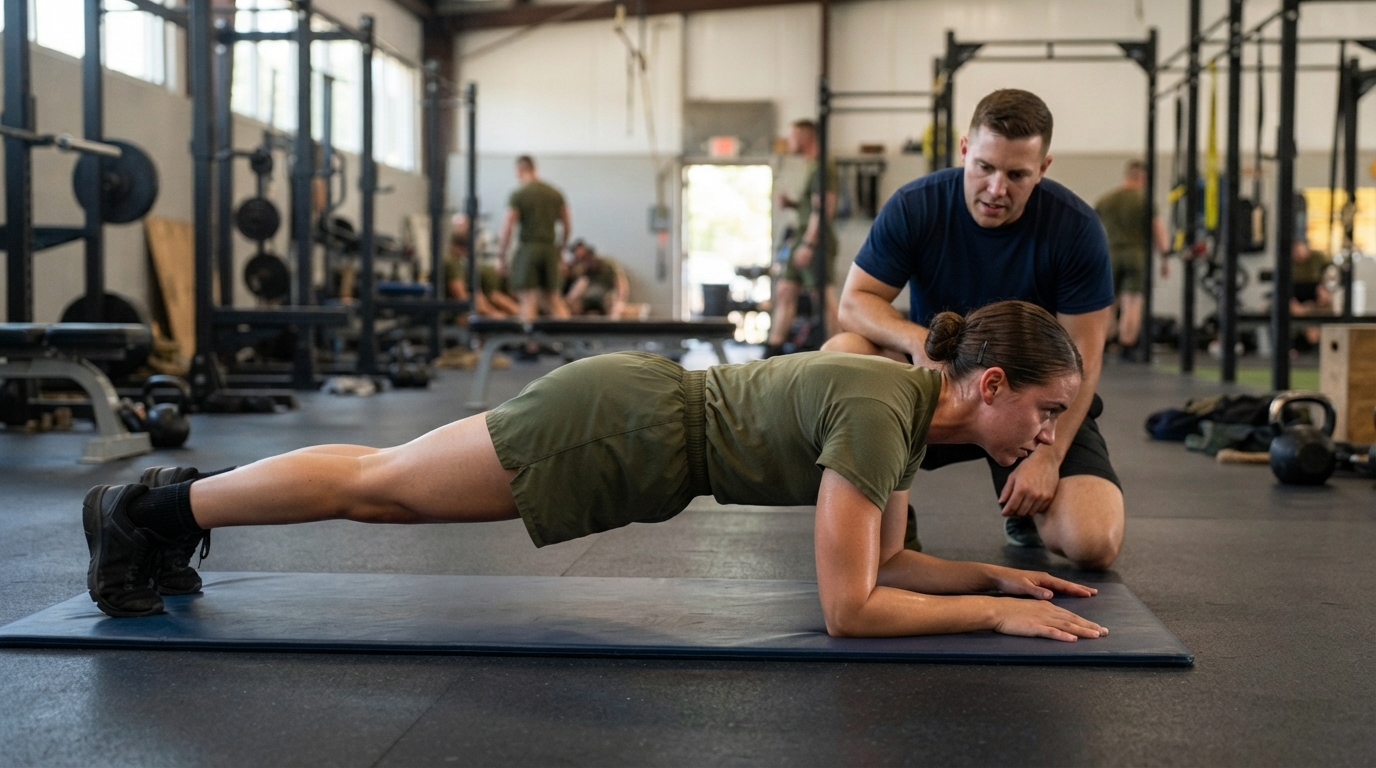
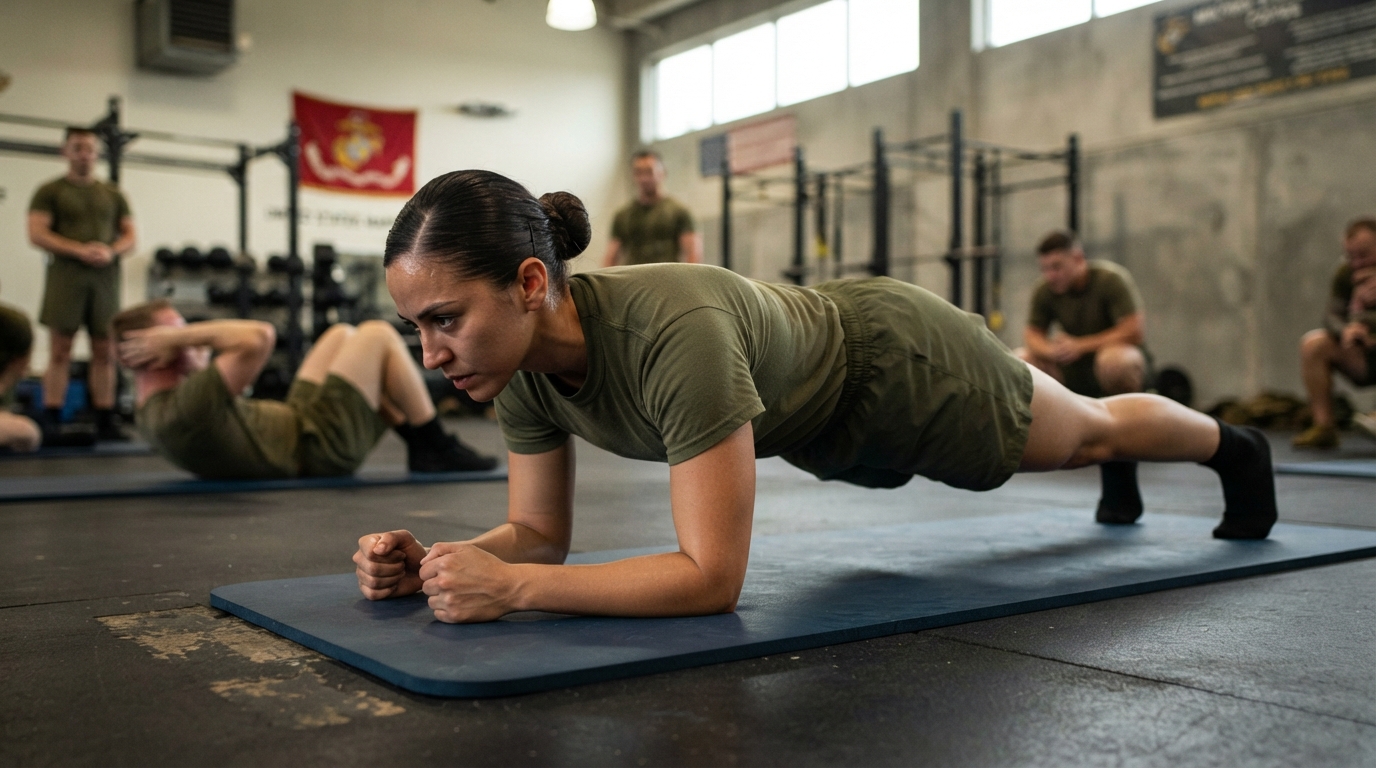
How Is the Plank Performed?
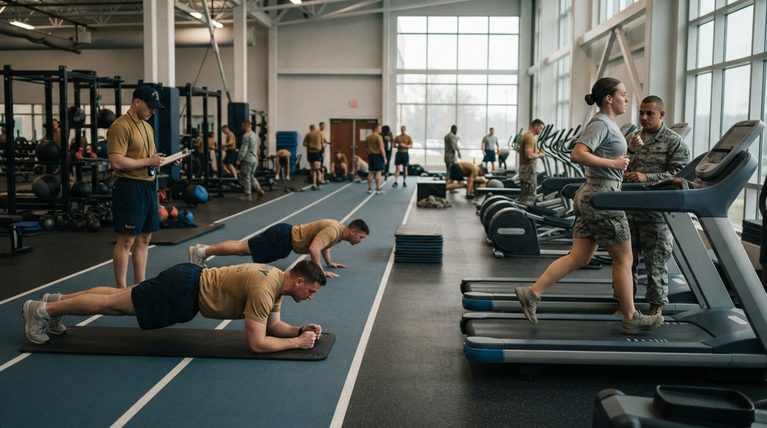
The plank is performed on a firm or suitably padded, non-slip, level surface.
The Marine begins with the forearms on the ground and maintains the required body position for as long as possible, up to the maximum time needed for 100 points.
The official testing procedure specifies the required position and standards that must be maintained during the event.
That means the goal is not simply to remain in something that looks approximately like a plank. The Marine must maintain the prescribed position for the time to count as an official performance.
What Happens When You Break Plank Position?
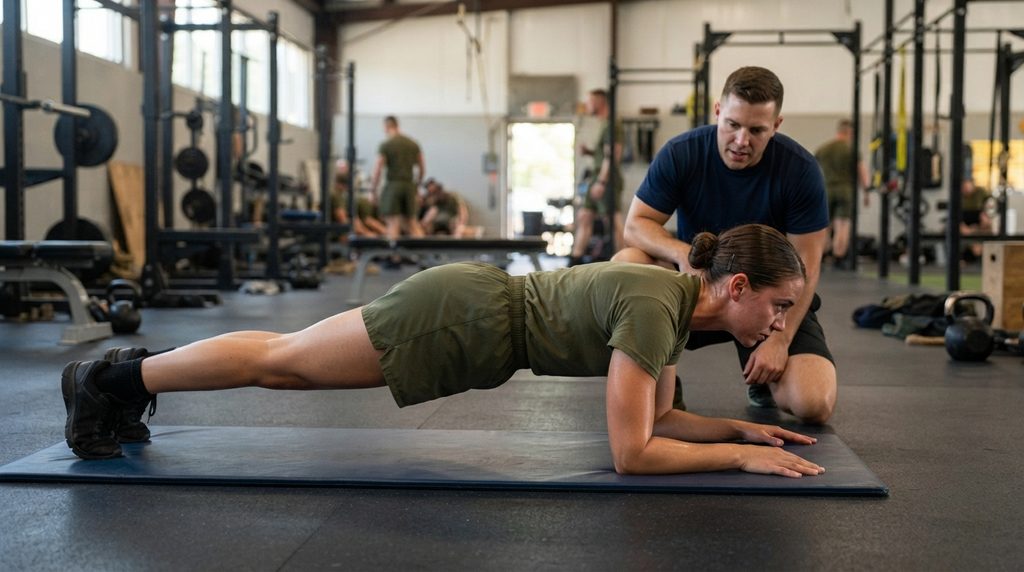
Your official plank time ends when you can no longer maintain the required position.
This is why form matters just as much as endurance.
A Marine may feel capable of holding the position longer, but if the required form is no longer maintained, the official time does not continue simply because the Marine is still physically on the ground.
For an official PFT, the event should be conducted according to the Marine Corps testing procedure and monitored by the designated PFT personnel.
How to Train for the USMC Plank
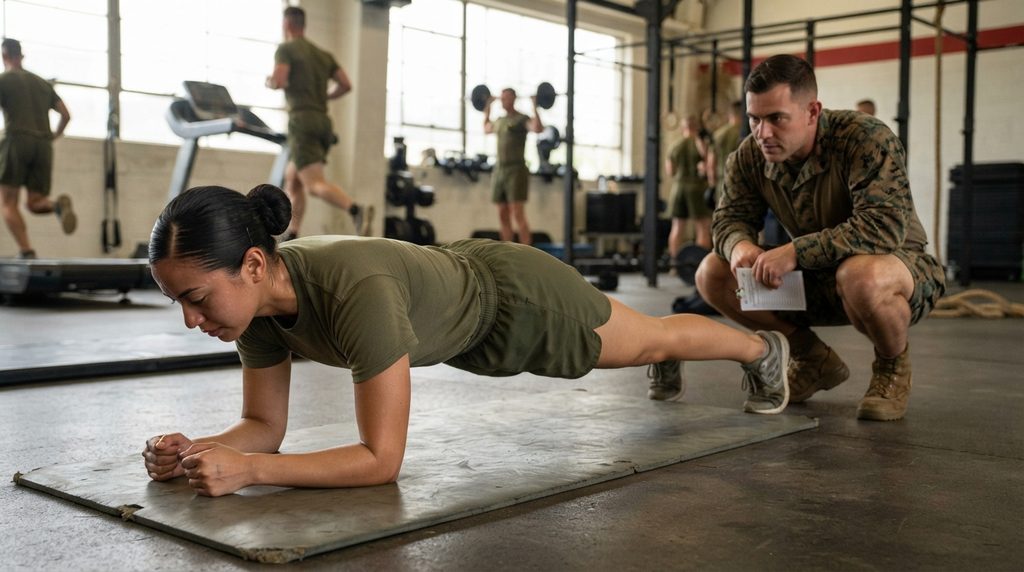
Training for the plank is different from training for the old crunch event.
Because the plank requires sustained isometric contraction, the most useful training approach is generally progressive exposure to longer holds while maintaining good form.
A simple progression can include:
1. Build a Consistent Base
Start with plank holds that you can perform with proper technique.
Avoid turning every training session into a maximum-effort attempt.
2. Increase Hold Duration Gradually
As your endurance improves, gradually increase the duration of your working sets.
For example, someone currently comfortable with 60–90 seconds could progressively work toward longer controlled holds.
3. Train Core Stability
Exercises such as:
- Side planks
- Dead bugs
- Bird dogs
- Loaded carries
- Controlled anti-rotation exercises
can complement direct plank training by developing trunk stability.
4. Practice Test-Specific Holds
As your PFT approaches, include longer plank efforts that resemble the actual testing demand.
The objective is to arrive at test day comfortable with maintaining correct position under fatigue.
Common USMC Plank Training Mistakes
Training Only Maximum Holds
Doing a maximum plank every day is not necessarily the best approach.
Regular submaximal training can allow you to accumulate quality work without constantly testing your limit.
Ignoring Form
A longer time with poor technique is not useful if the position would not be accepted during the official test.
Practice the exact position required during the PFT.
Never Practicing Under Fatigue
The plank is one part of the PFT. If you always practice it while completely fresh, the experience may differ on test day.
Occasional practice after other controlled training can help you become comfortable maintaining position while tired.
Using an Old Scoring Chart
This is one of the easiest mistakes to make.
Older Marine Corps documents may show:
- Crunches as an option
- A 4:20 maximum plank time
- A 1:03 minimum plank time
Those figures are not the current plank standards.
The current scoring table uses 1:10 for 40 points and 3:45 for 100 points.
Frequently Asked Questions
When did the Marine Corps stop using crunches?
The Marine Corps made the plank mandatory beginning January 1, 2023. From that date, the abdominal crunch was no longer authorized as a PFT alternative.
When was the plank first introduced?
The Marine Corps introduced the plank as an alternative to the abdominal crunch in 2020.
What is the minimum USMC plank time?
The current scoring table awards 40 points at 1:10.
What is the maximum USMC plank time for 100 points?
The maximum scoring time is 3:45, which earns 100 points.
Is the plank score different for men and women?
No. The current plank scoring table is sex-neutral. The same time corresponds to the same plank score.
Is the plank score different for different age groups?
No. The current plank scoring table is also age-neutral.
Can I still take crunches instead of the plank?
No. Crunches are no longer an authorized PFT core-event option. The plank became mandatory on January 1, 2023.
Is holding the plank longer than 3:45 worth extra points?
No. 3:45 is the maximum time used for scoring and equals 100 points. Holding longer does not produce a score above 100.
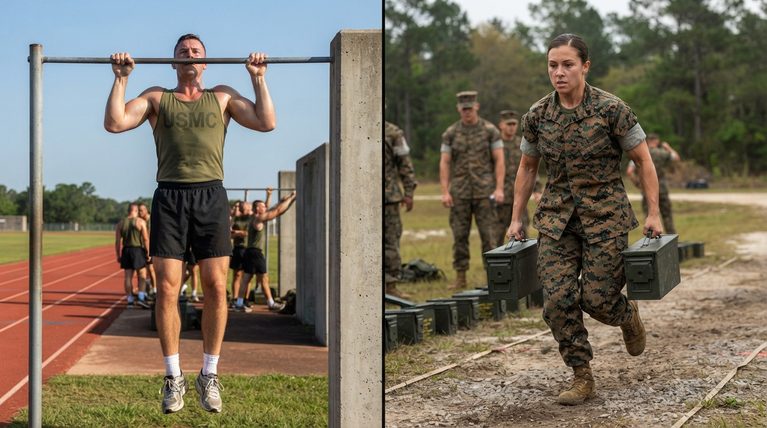
Does the CFT have a plank event?
No. The CFT does not use the plank as one of its three scored events. The CFT consists of Movement to Contact, Ammunition Can Lift, and Maneuver Under Fire.
Use the PFT Calculator to Check Your Plank Score
Your plank score is straightforward to calculate because the current Marine Corps standard uses a single age- and sex-neutral scoring table.
Enter your plank hold time into the PFT calculator to see the corresponding score.
You can then combine that result with your other PFT event scores to estimate your overall PFT performance.
For official testing, always verify your requirements against the latest Marine Corps order and your unit’s instructions.
Related USMC PFT Guides
- USMC PFT Standards by Age and Gender: Complete Scoring Chart
- USMC PFT Calculator: Calculate Your Score
- USMC Pull-Up and Push-Up Standards
- USMC 3-Mile Run Standards
- PFT vs. CFT: What’s the Difference and Why You Need Both?
- What Is a 1st Class PFT Score? USMC Class Breakdown