
PFT vs. CFT: What’s the Difference and Why Marines Need Both?
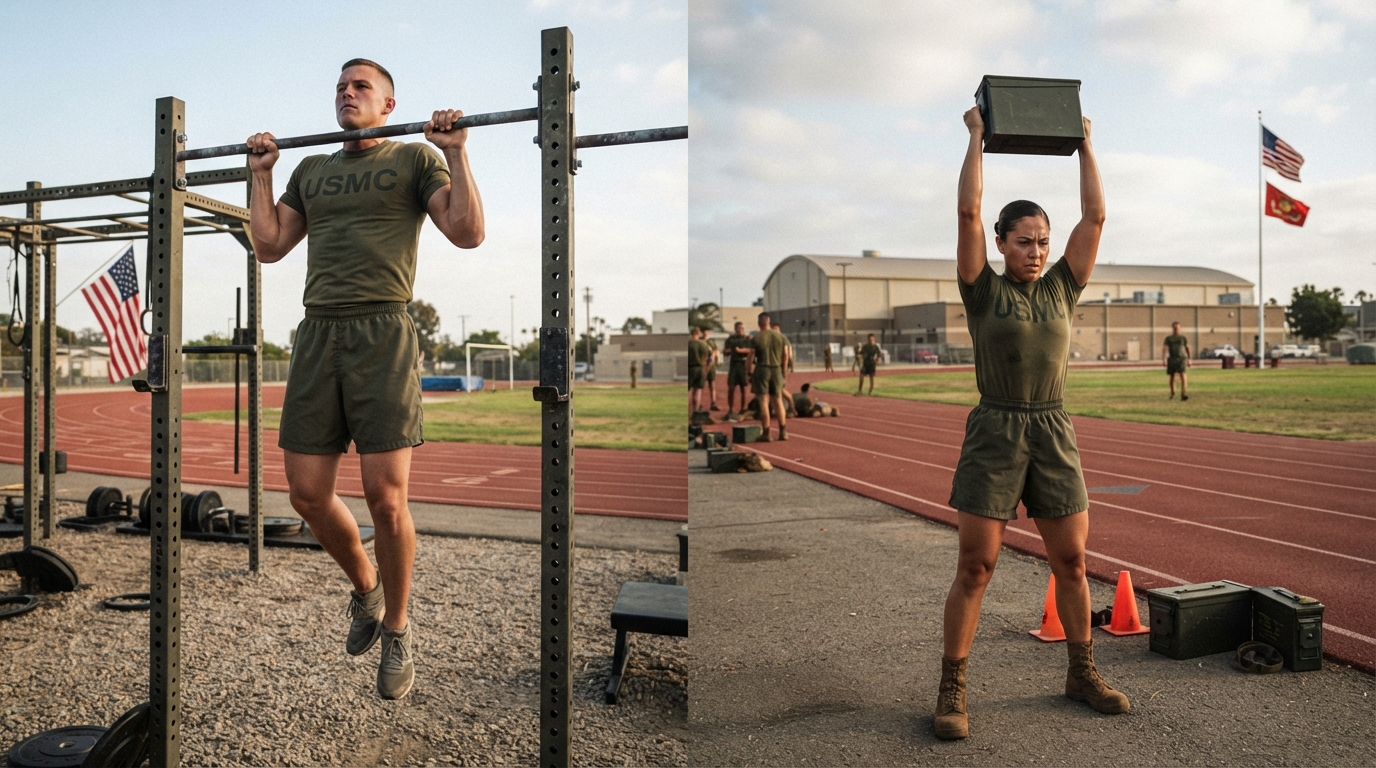
If you’re new to the Marine Corps, you may hear PFT and CFT mentioned together and wonder whether they are simply two versions of the same fitness test.
The Marine Corps Physical Fitness Test (PFT) and Combat Fitness Test (CFT) are separate annual assessments designed to measure different aspects of physical performance. The PFT focuses on general physical fitness, while the CFT emphasizes functional fitness and movements that more closely reflect the physical demands of combat.
Understanding the difference matters because preparing for one test does not automatically prepare you for the other.
The current Marine Corps publication governing these requirements is MCO 6100.13A W/ADMIN CH-5, which covers the Marine Corps Physical Fitness and Combat Fitness Tests.
PFT vs. CFT: The Short Answer
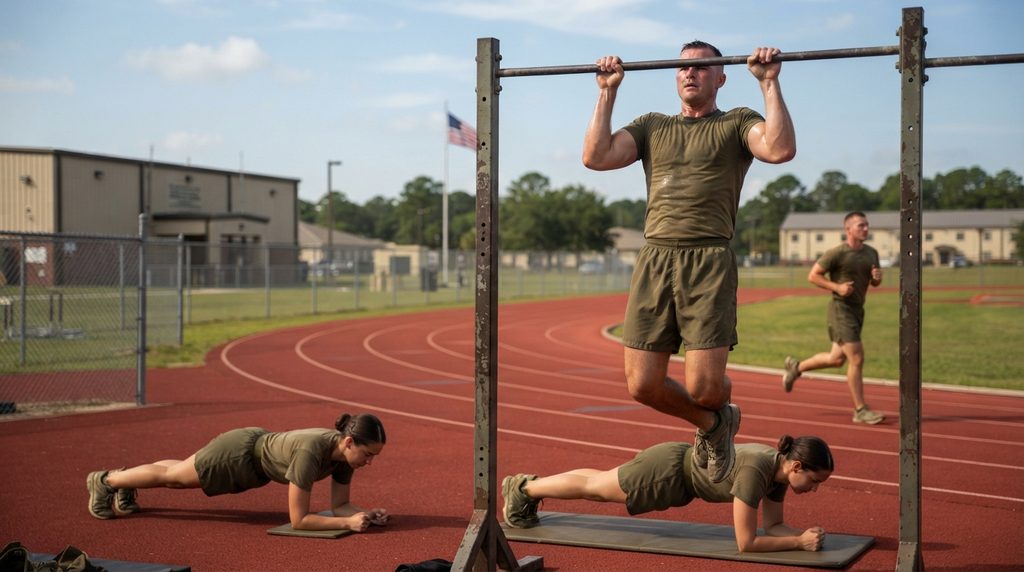
The PFT is designed to measure broad physical fitness, including muscular endurance, core strength, and cardiovascular endurance.
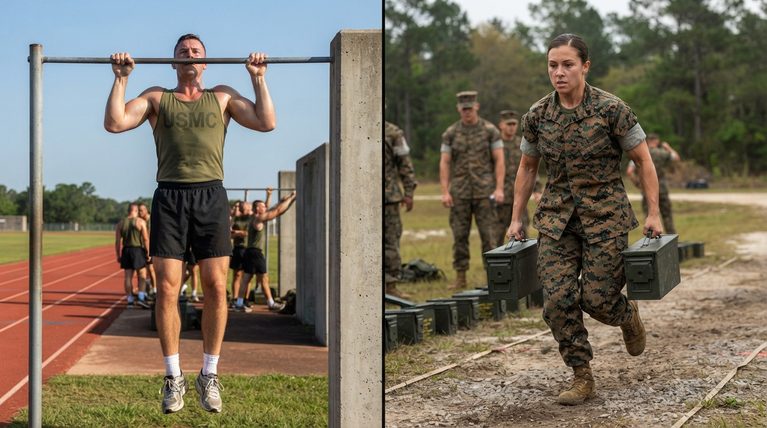
The CFT focuses more on functional and combat-oriented physical performance, including running in uniform, lifting an ammunition can, and completing a timed maneuver course.
Both tests are important, but they measure different physical abilities.
A Marine can perform very well on the PFT and still need specific preparation for the CFT. Likewise, someone who is comfortable with the CFT’s functional movements should not assume that they will automatically achieve a strong PFT score.
PFT
The PFT includes:
- Pull-ups or push-ups
- Plank
- 3-mile run or approved 5K row option
CFT
The CFT includes:
- Movement to Contact
- Ammunition Can Lift
- Maneuver Under Fire
The exact scoring standards depend on factors such as age, sex, and applicable Marine Corps standards.
Why Does the Marine Corps Have Both a PFT and a CFT?
The simplest answer is that general fitness and combat-oriented fitness are not exactly the same thing.
The PFT provides a standardized way to assess fundamental physical capabilities such as upper-body strength and endurance, core endurance, and cardiovascular performance.
The CFT adds a more functional component. It requires Marines to perform movements involving speed, lifting, carrying, changing direction, and working under fatigue.
The two tests therefore complement each other.
For example, a Marine may have excellent running endurance and pull-up performance but still need additional training for the repeated lifting and movement transitions required during the CFT.
That is why preparing only for the PFT can leave gaps in CFT preparation.
PFT vs. CFT: Key Differences
| Category | PFT | CFT |
|---|---|---|
| Primary purpose | General physical fitness | Functional/combat fitness |
| Events | Pull-ups/push-ups, plank, 3-mile run or 5K row | Movement to Contact, Ammunition Can Lift, Maneuver Under Fire |
| Main abilities tested | Strength, muscular endurance, core endurance, cardiovascular fitness | Speed, functional strength, agility, muscular endurance |
| Typical environment | Athletic fitness setting | Combat-oriented testing environment |
| Annual requirement | Yes | Yes |
| Maximum score | 300 | 300 |
The important point is not which test is “harder.” The tests are designed to assess different physical qualities.
When Is the PFT Conducted?
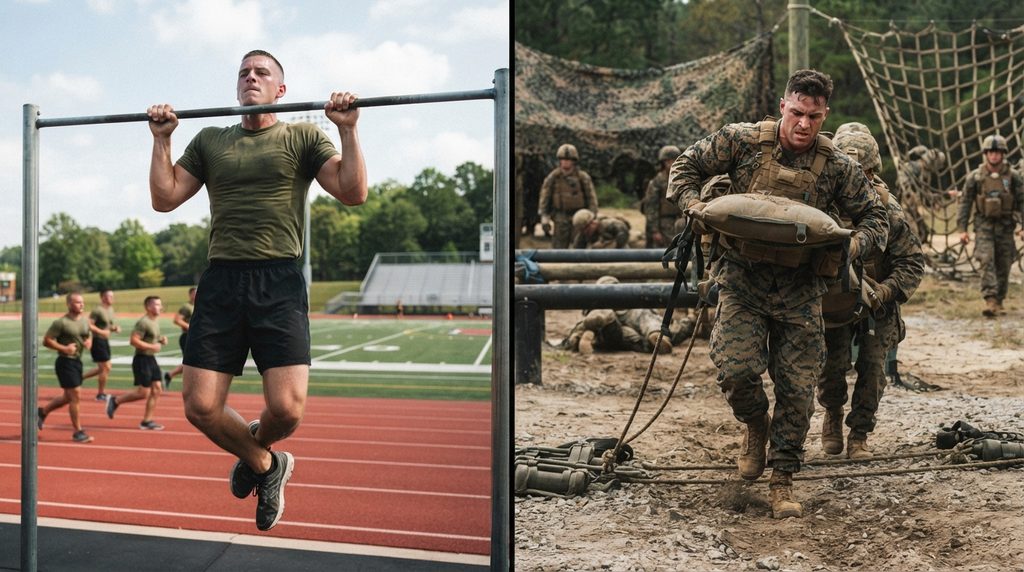
For Marines, the PFT is an annual requirement and is conducted during the first half of the calendar year.
The standard PFT testing window is:
January 1 through June 30.
Marine Corps guidance also establishes requirements for Reserve components, with specific provisions for different Reserve statuses.
Because requirements can change through Marine Corps orders and administrative changes, Marines should verify the current guidance with their unit’s PFT/CFT coordinator.
When Is the CFT Conducted?
The CFT is the second major annual fitness assessment and is normally conducted during the second half of the calendar year.
This creates a useful separation between the two assessments rather than requiring Marines to prepare for both tests at the same time.
However, the exact scheduling process can depend on the Marine’s unit and circumstances. Always confirm your actual testing date through your command.
PFT Events Explained
1. Pull-Ups or Push-Ups
The first PFT event measures upper-body muscular endurance.
Marines may complete either pull-ups or push-ups under the applicable standards.
The scoring table varies according to the Marine’s applicable age and sex standards.
2. Plank
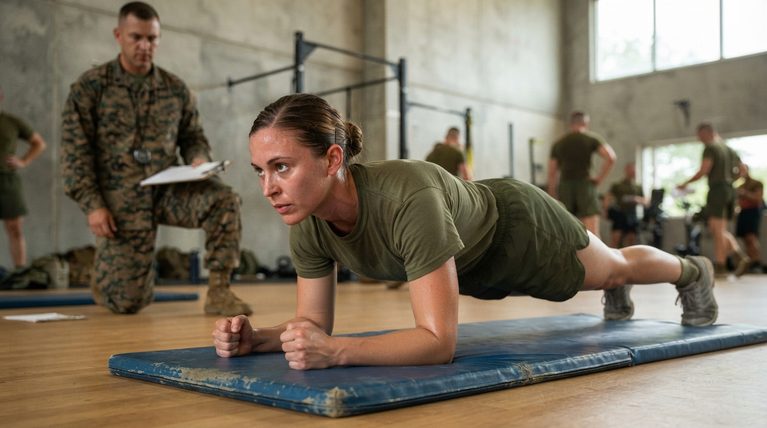
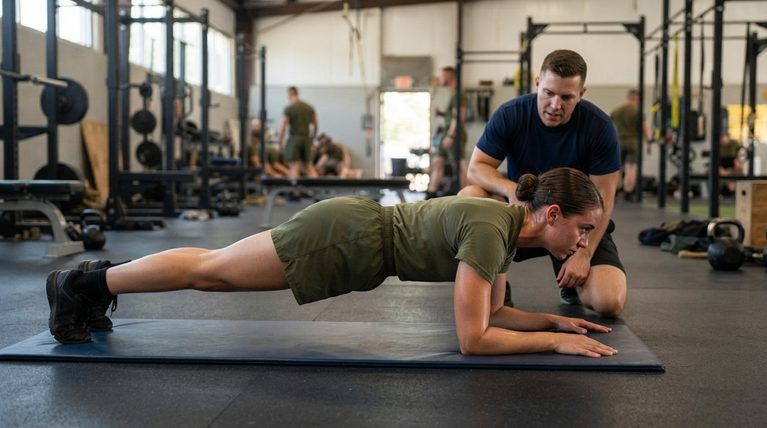
The plank evaluates core endurance.
Unlike a traditional repetition-based abdominal exercise, the plank requires the Marine to maintain a prescribed body position for time.
Core endurance is important for both athletic performance and many physical tasks performed during military training.
3. 3-Mile Run or 5K Row
The PFT’s cardiovascular event evaluates endurance.
The 3-mile run is the traditional option, while the 5K row is an approved alternative under applicable Marine Corps guidance.
A strong performance requires more than simply being able to run a long distance. Pacing, aerobic conditioning, running economy, and preparation for the specific test format all matter.
CFT Events Explained
1. Movement to Contact
The Movement to Contact is an 880-yard run conducted in the required uniform and footwear.
Unlike a normal road race, the event requires Marines to perform while wearing the prescribed military uniform and boots.
That changes the physical demand and makes event-specific preparation important.
2. Ammunition Can Lift
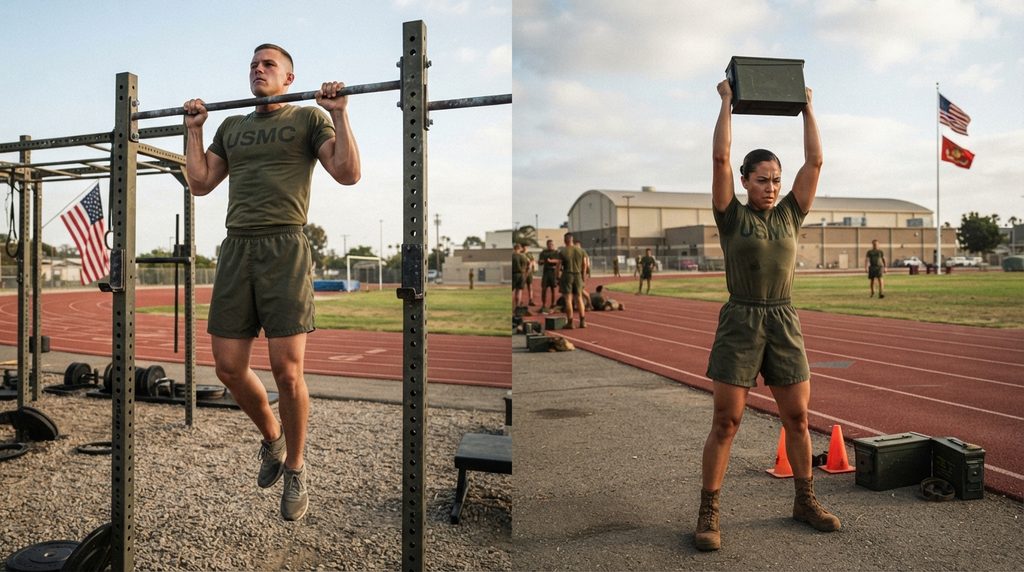
The Ammunition Can Lift tests repeated upper-body lifting endurance.
The event involves lifting a 30-pound ammunition can overhead according to the prescribed movement and scoring standards.
Because the movement is repetitive, muscular endurance and technique are particularly important.
3. Maneuver Under Fire
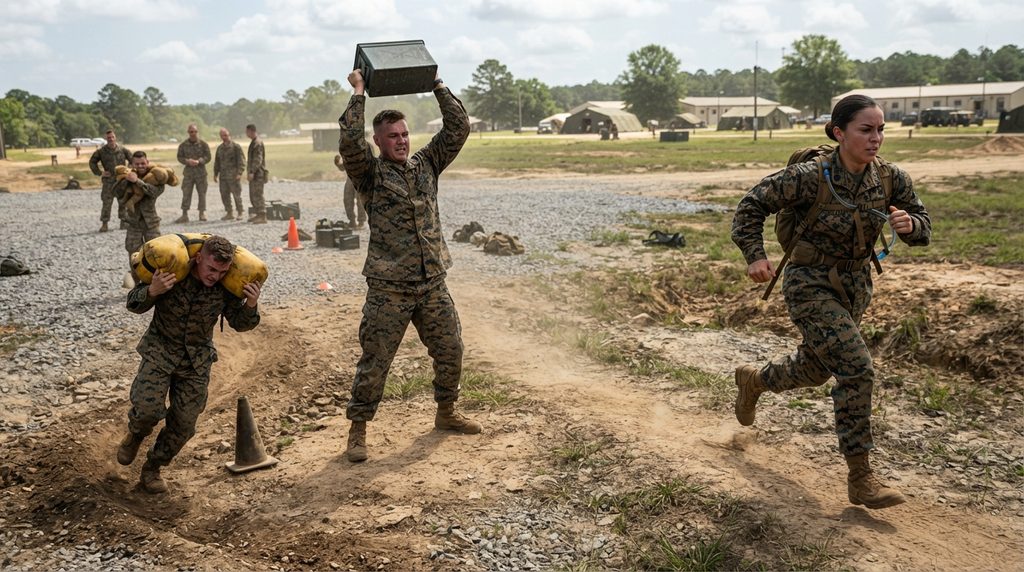
The Maneuver Under Fire is a 300-yard course that combines several functional movements.
The course is designed around tasks involving movement, changes of direction, carrying, dragging, and other physically demanding actions.
Because the event combines multiple movements rather than testing one isolated fitness quality, simply being a good distance runner does not guarantee a strong performance.
PFT and CFT Scoring
Both the PFT and CFT use a 300-point maximum scoring system.
However, Marines should not rely on an old scoring chart found online. PFT and CFT standards can be updated through Marine Corps orders and administrative changes.
The current Marine Corps publication should therefore be treated as the authoritative source when checking official requirements. The Marine Corps currently lists MCO 6100.13A W/ADMIN CH-5 as the current publication.
Important 2026 PFT change
Beginning January 1, 2026, Marines in combat arms Primary Military Occupational Specialties are subject to a sex-neutral PFT scoring standard, using the male, age-normed scoring standard, with a minimum PFT score of 210 points. Non-combat-arms Marines continue to use the applicable existing sex- and age-normed standards.
This is an important reason to make sure your PFT calculator reflects the current 2026 rules rather than an older scoring table.
PFT vs. CFT and Body Composition
PFT and CFT performance can also interact with Marine Corps body-composition requirements.
Current Marine Corps guidance states that Marines who score 285 points or higher on both the PFT and CFT may receive an increased body-fat allowance, subject to the applicable limits.
The current limits are 26% for males and 36% for females. Marines who exceed those limits can still be processed under the Body Composition Program regardless of their PFT/CFT performance.
There is also an additional body-fat allowance associated with scoring 250 or higher on both tests, subject to the applicable maximum limits.
Because body-composition policy has changed recently, Marines should check the current Marine Corps guidance rather than relying on older articles or calculators.
How to Train for Both the PFT and CFT
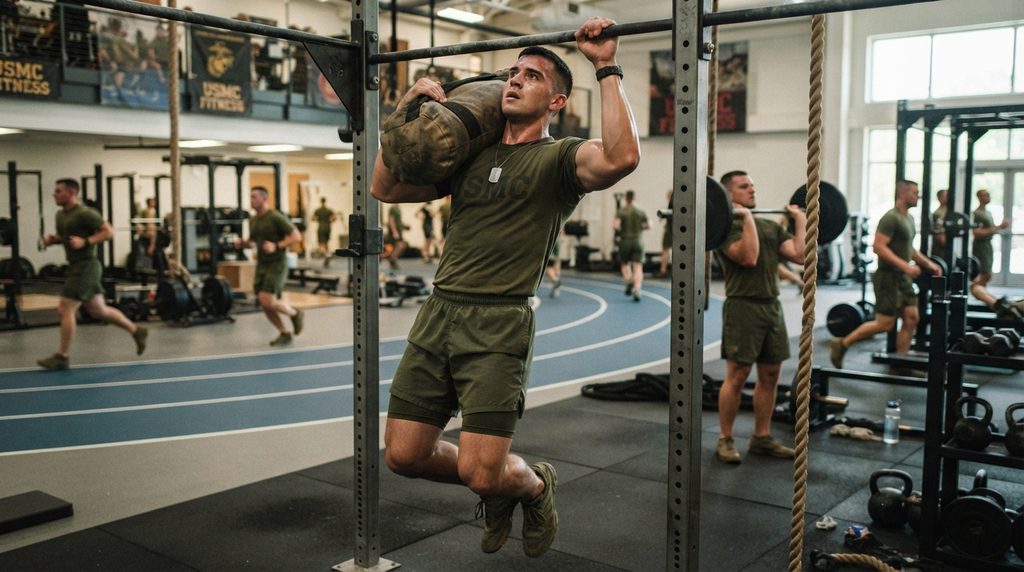
One of the biggest mistakes is assuming that PFT preparation automatically covers CFT preparation.
It doesn’t.
A well-rounded program should include several types of training.
For the PFT
Focus on:
- Pull-ups or push-ups
- Plank endurance
- Running
- Aerobic conditioning
- Running-specific pacing
- Recovery and mobility
For the CFT
Include:
- Short-distance running
- Sprint intervals
- Loaded or functional carries
- Overhead lifting endurance
- Dragging and carrying movements
- Direction changes
- Movement transitions
- Training under fatigue
The goal is not necessarily to train harder every day. The goal is to train specifically for the physical demands of each assessment.
Should You Train Differently for the PFT and CFT?
Yes.
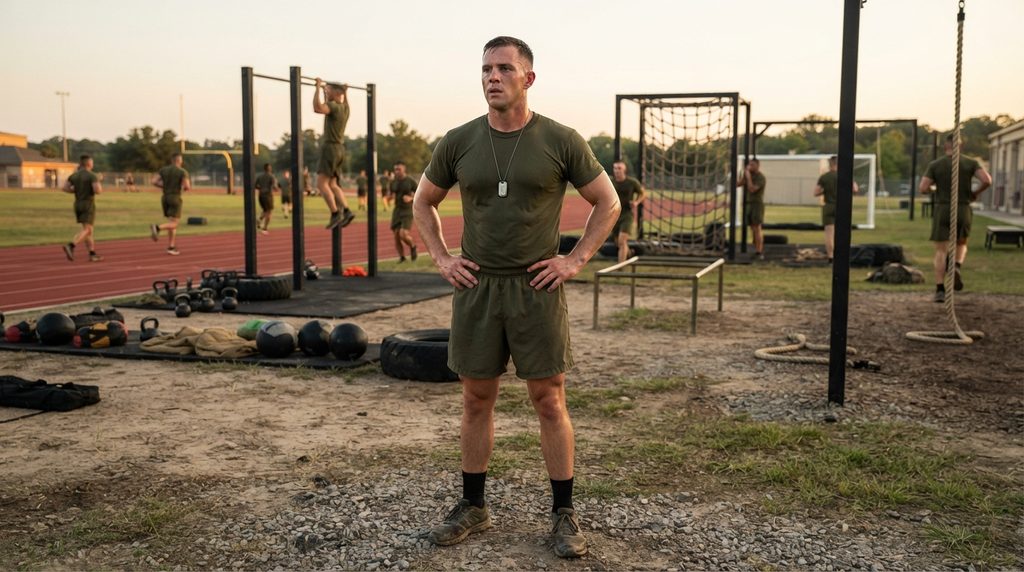
There is significant overlap between the two tests, but the specific demands are different.
For example, improving your aerobic base can help with both tests, but running a long distance alone will not adequately prepare you for the CFT’s functional movements.
Similarly, practicing pull-ups can improve PFT performance, but it does not directly prepare you for every movement required during the CFT.
A smart training program therefore develops general fitness while also including exercises that closely resemble the actual test events.
Frequently Asked Questions
Can I take the CFT instead of the PFT?
No. The PFT and CFT are separate Marine Corps fitness requirements. One is not simply a substitute for the other.
Which is harder, the PFT or the CFT?
There is no universal answer.
The two tests measure different physical abilities. A Marine with strong cardiovascular endurance may feel more comfortable with some PFT events, while another Marine may perform better in the functional movements of the CFT.
Your training background can make one test feel more difficult than the other.
Does a high PFT score guarantee a high CFT score?
No.
A strong PFT demonstrates strong performance in the qualities tested by the PFT, but the CFT includes different movements and demands.
Specific CFT practice is still important.
Do the PFT and CFT both have a maximum score of 300?
Yes. Both assessments use a 300-point maximum scoring system.
Does scoring 285 on my PFT automatically give me the body-fat allowance?
No.
The current body-composition guidance refers to scoring 285 or higher on both the PFT and CFT, subject to the applicable body-fat limits.
Is the PFT still different for combat-arms Marines in 2026?
Yes.
Starting January 1, 2026, combat-arms Marines are subject to the new sex-neutral PFT scoring standard using the male, age-normed scoring standard, with a minimum PFT score of 210 points.
Are PFT and CFT standards updated over time?
Yes.
Marine Corps fitness policy can change through new orders and administrative changes. The Marine Corps currently lists MCO 6100.13A W/ADMIN CH-5 as the current PFT/CFT publication.
For that reason, online calculators should clearly state which version of the Marine Corps standards they use.
PFT vs. CFT: The Bottom Line
The PFT and CFT are not two versions of the same test.
The PFT measures broad physical fitness through upper-body strength or endurance, core endurance, and cardiovascular performance.
The CFT focuses more heavily on functional movement, speed, lifting, and physically demanding tasks performed under fatigue.
The best way to prepare is to train for both.
And because Marine Corps standards can change, always make sure your PFT or CFT calculator is based on the current official standards, particularly if you are preparing for a 2026 test.
Check Your PFT or CFT Score
Use the calculator on this website to estimate your score based on your age, sex, and event performance.
For official requirements, always verify your results against the latest Marine Corps guidance and your unit’s instructions.
Related PFT & CFT Guides
- USMC PFT Standards by Age and Gender: Complete Scoring Chart
- USMC CFT Standards and Scoring: Complete Guide
- What Is a 1st Class PFT Score? USMC Class Breakdown
- USMC PFT Calculator: Calculate Your Score
- USMC CFT Calculator: Calculate Your Combat Fitness Score