CFT Events Explained: Movement to Contact, Ammo Can Lift, and Maneuver Under Fire
Most Marines can describe the PFT’s three events in a sentence each — pull-ups, plank, run. The CFT gets described far more vaguely, usually as some version of “the hard one with the ammo cans.” That vagueness is part of why so many Marines walk into it underprepared. Here’s each event broken down individually — what it actually involves, how it’s measured, and what tends to go wrong for people who haven’t drilled it directly.
Why These Three Events Specifically
The CFT’s three events weren’t chosen arbitrarily — each one targets a distinct physical demand that shows up in actual field conditions, and together they cover a broader range of combat-relevant movement than any single event could.
Movement to Contact tests loaded running speed. The Ammo Can Lift tests repeated overhead strength under fatigue. Maneuver Under Fire tests complex movement transitions under time pressure. A Marine could conceivably be strong in one of these categories and weak in another, which is exactly why the test measures all three separately rather than relying on one general fitness proxy.
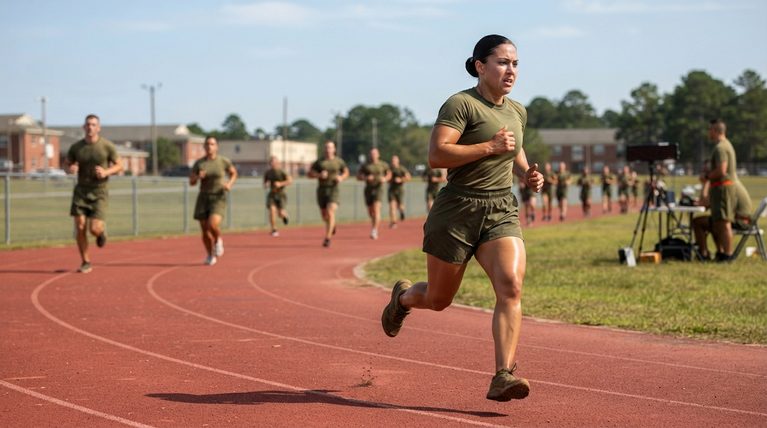
Movement to Contact
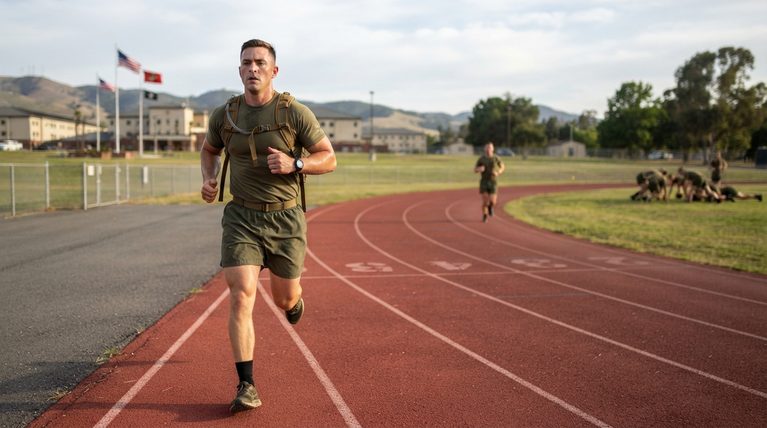
What it is: An 880-yard run, timed, run in boots and the full utility uniform rather than running shoes and athletic gear.
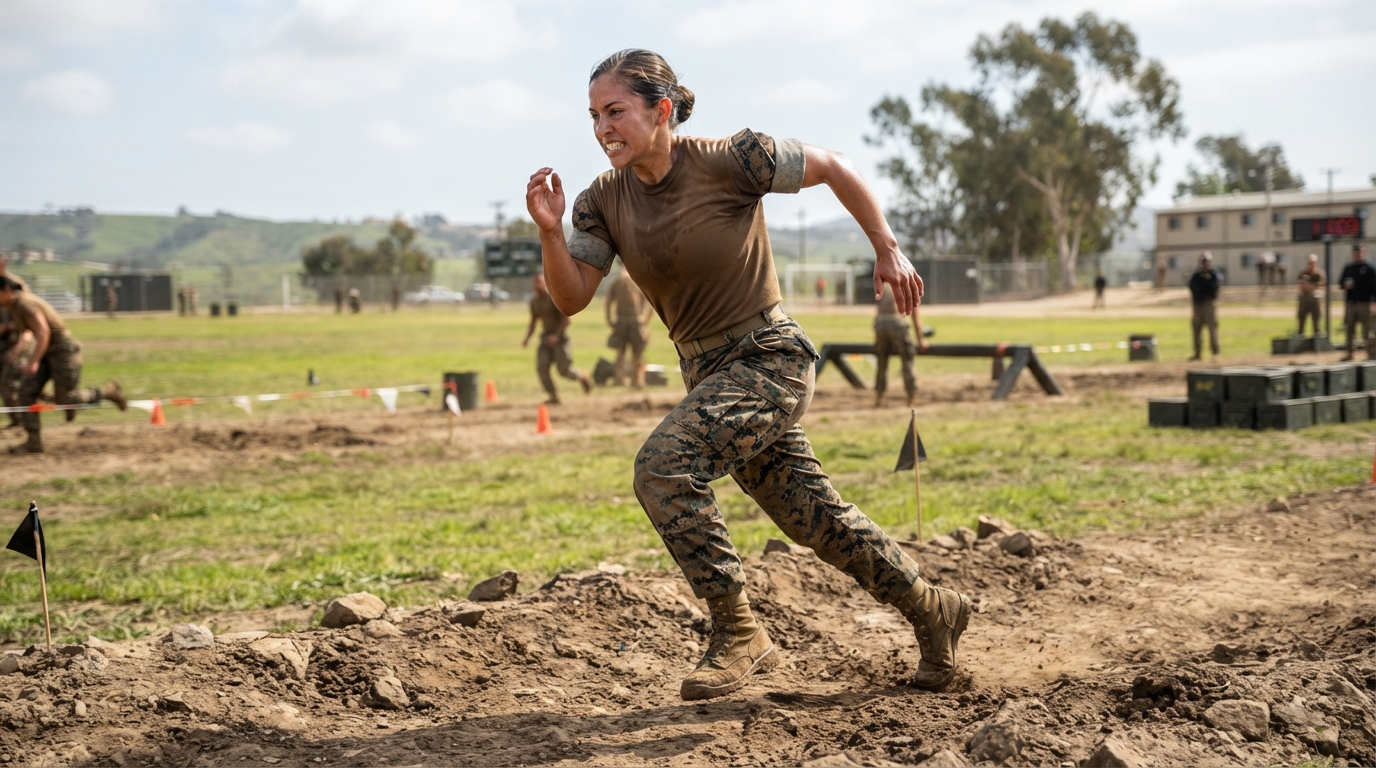
What it’s testing: Not pure running speed in isolation, but loaded movement — how fast you can close distance to a position while wearing standard-issue gear, which behaves differently than optimized running footwear and clothing. The uniform requirement is deliberate, not incidental.
Where people get caught off guard: Marines who train running almost exclusively in athletic shoes often find the boots-and-utilities version noticeably harder than their regular training pace would suggest the added weight and reduced ankle mobility change the mechanics enough that race-pace expectations from shoe-based training don’t transfer directly.
If you’re training for this event specifically, doing at least some running work in the actual uniform and footwear you’ll test in closes that gap.
Ammo Can Lift
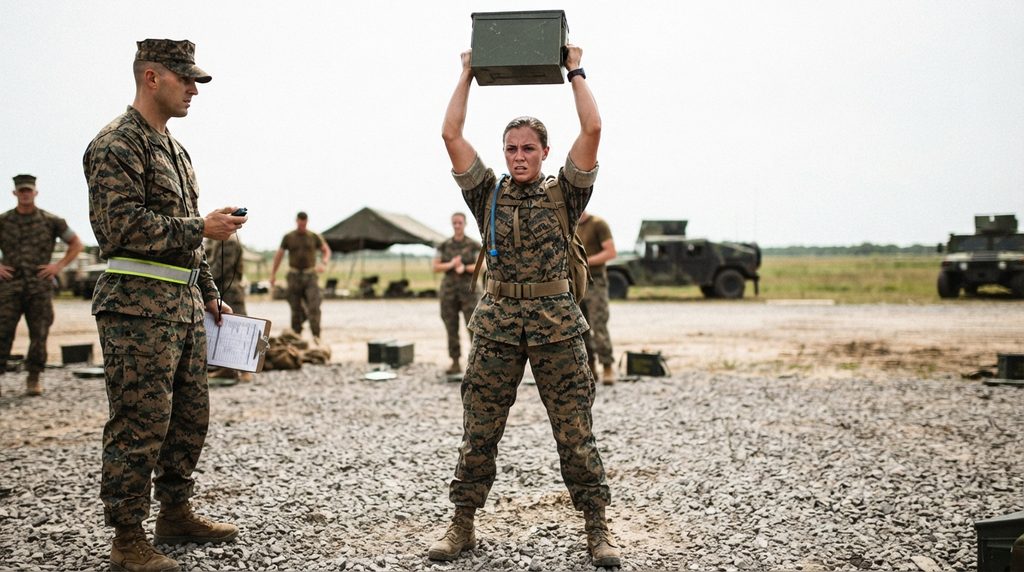
What it is: Lifting a 30-pound ammo can from shoulder height to fully overhead, repeatedly, for up to a 2-minute time cap. Reps are counted toward your score within that window.
What it’s testing: Shoulder and core endurance under repeated load — a different demand than a single max-effort lift. This is closer to a strength-endurance circuit than a one-rep-max test, and fatigue management across the full 2 minutes matters as much as raw shoulder strength.
Where people get caught off guard: Reps tend to fall off sharply in the second half of the 2-minute window for Marines who haven’t specifically trained repeated overhead pressing under fatigue. A strong single overhead press doesn’t guarantee a strong rep count here — pacing across the full window, rather than going all-out in the first 30 seconds and fading hard, tends to produce better total scores.
Maneuver Under Fire
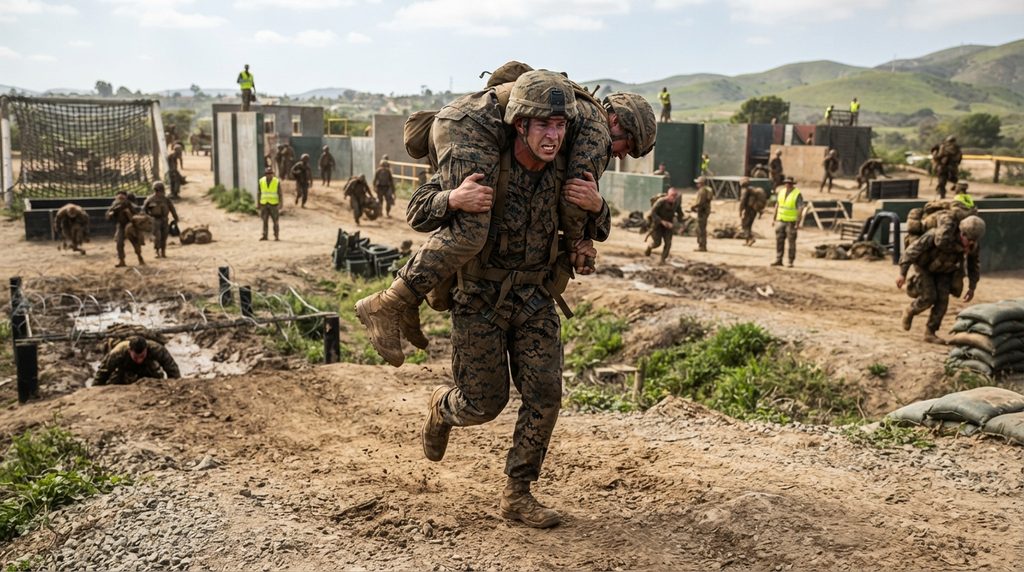
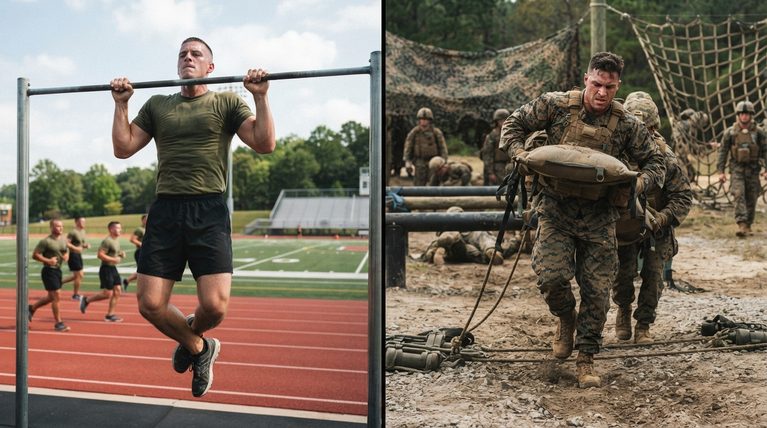
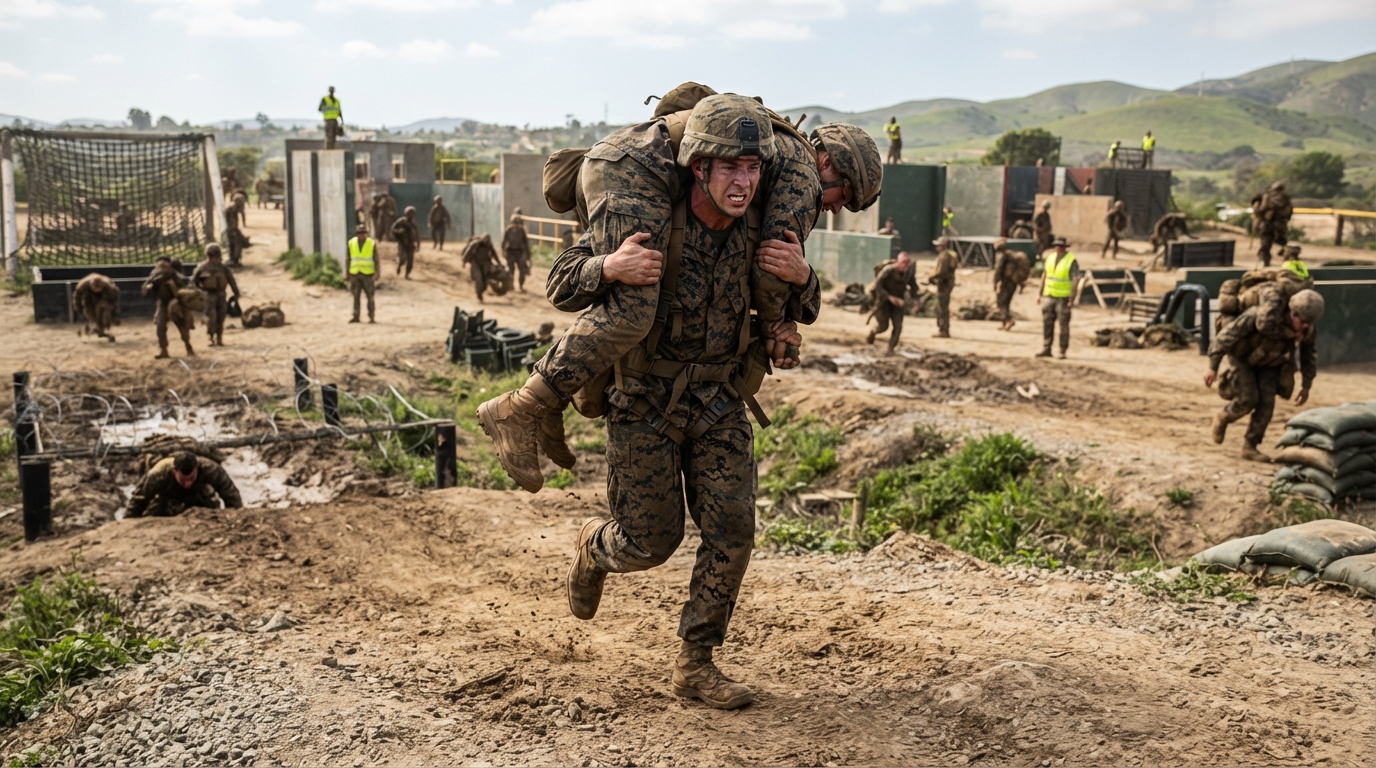
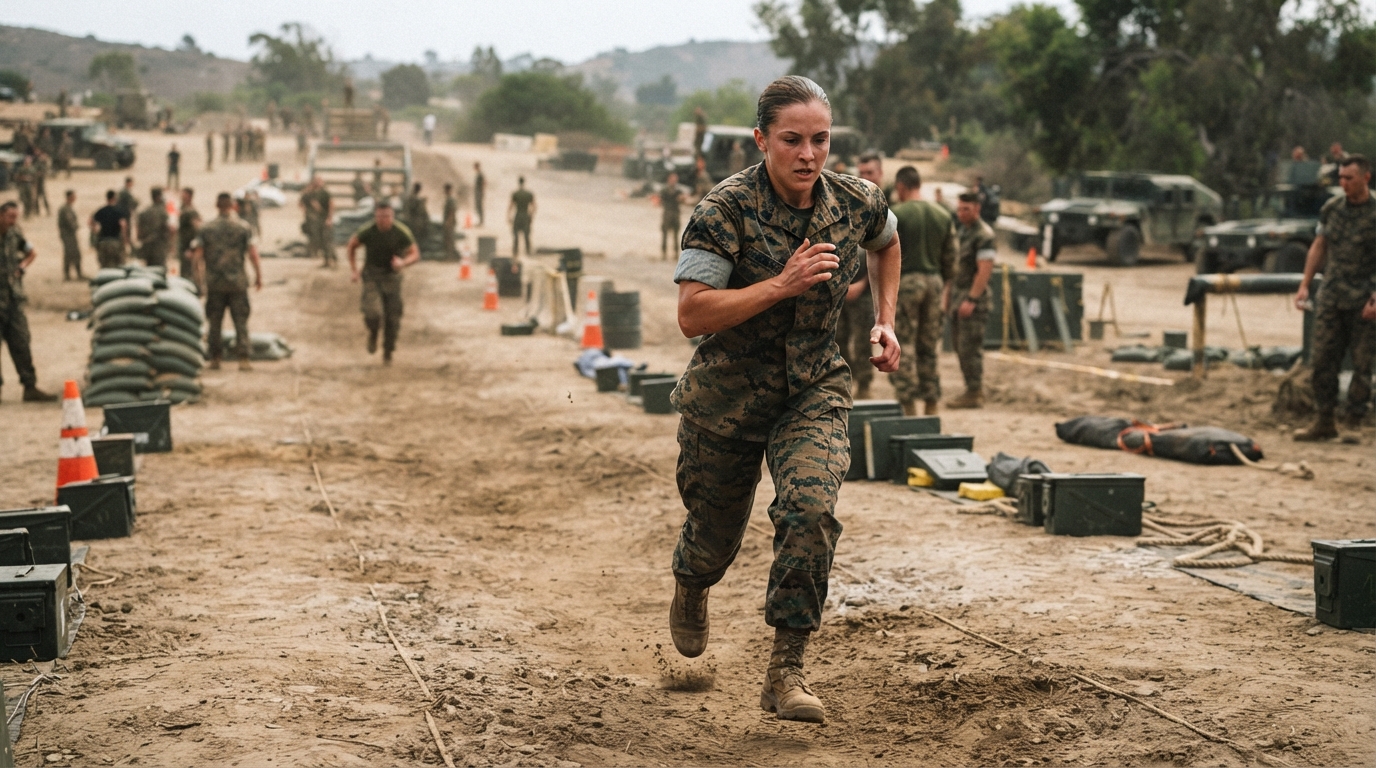
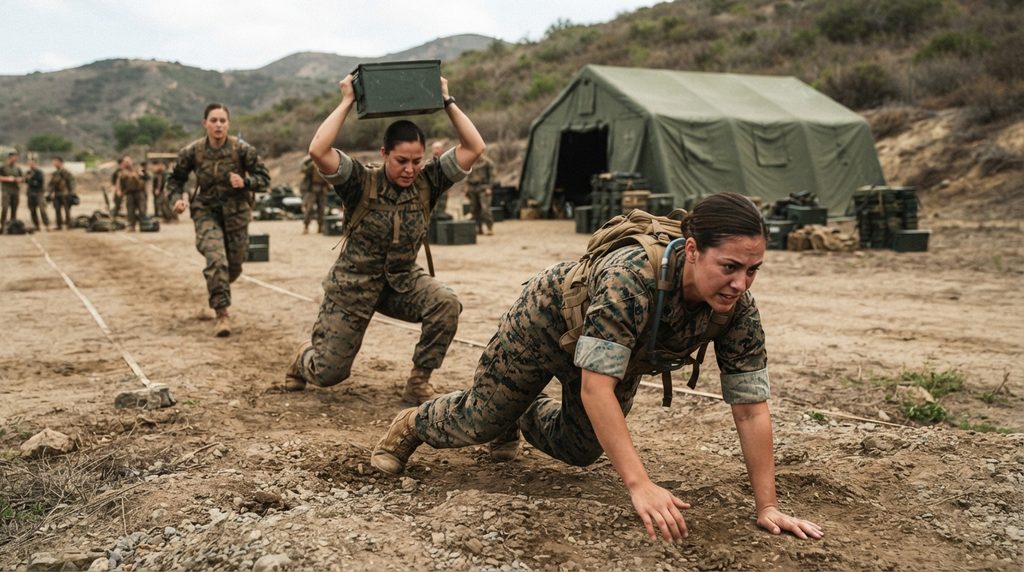
What it is: The most complex event on either test — a 300-yard shuttle course that combines multiple distinct movements into one continuous, timed run: a low crawl, a high crawl, buddy drags and carries, an ammunition resupply, a simulated grenade throw, and agility running between stations.
What it’s testing: Movement-pattern familiarity and functional strength under time pressure, more than raw fitness. Because the course strings together several different physical tasks in sequence, transitions between them cost real time if they haven’t been drilled — fumbling the ammo resupply, hesitating before a buddy carry, or losing form during a crawl-to-sprint transition all add up.
Where people get caught off guard: This is the event where general fitness translates least directly into a good score. A Marine with a strong PFT and solid Ammo Can Lift numbers can still post a mediocre Maneuver Under Fire time simply from unfamiliarity with the course’s specific sequence and transitions. Because of this, this event benefits more than the other two from direct, repeated practice on the actual movement pattern rather than general strength or cardio training alone.
How Each Event Is Scored
All three CFT events follow the same structural rules as the PFT’s events: each one has an independent 40-point floor and a 100-point ceiling, for a combined maximum of 300 across the test. Scoring below 40 on any single event — Movement to Contact, Ammo Can Lift, or Maneuver Under Fire — fails the entire CFT, regardless of how strong your performance was on the other two.
[Full CFT event scoring table by age bracket and gender goes here — time/rep-to-point conversions for each of the three events, verified against the current MCO 6100.13A standard before publishing]
Age and gender brackets follow the same structure used across the PFT — checkpoints at 17–20 through 51+, with standards easing at each one for the same reasons.
Training Each Event as a Distinct Skill
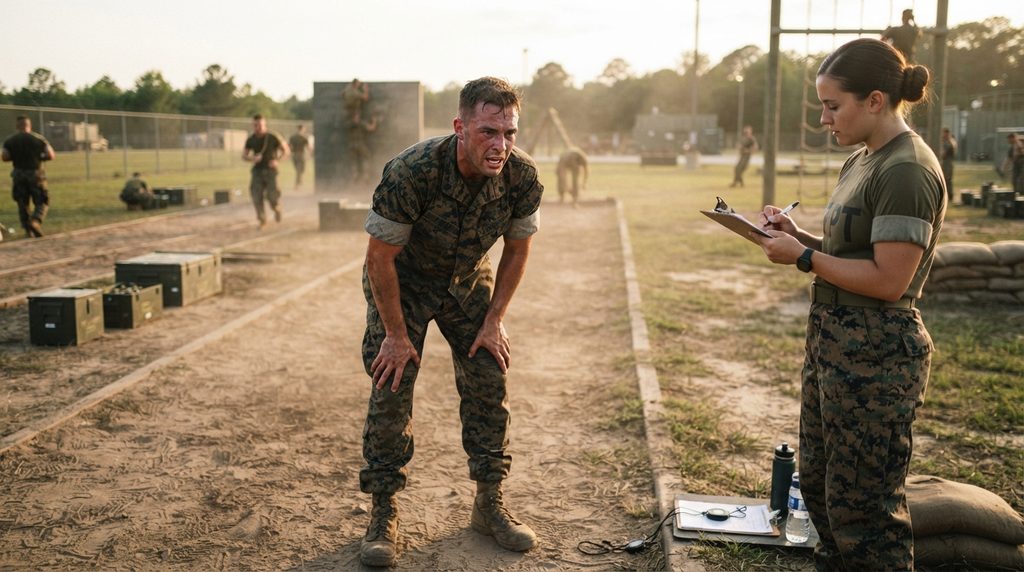
Because these three events test genuinely different capacities, training that treats “CFT prep” as one undifferentiated block of general fitness tends to under-prepare Marines for at least one of the three.
For Movement to Contact, the highest-value training is running in the actual gear you’ll test in — boots and utilities — at least periodically, rather than exclusively in running shoes. For the Ammo Can Lift, training repeated overhead pressing patterns under fatigue, with attention to pacing across a full 2-minute window rather than max-effort single reps, transfers more directly than general shoulder strength work alone. For Maneuver Under Fire, the highest-value training is simply drilling the actual sequence — crawling, carrying, resupplying, throwing, sprinting — enough times that the transitions become automatic rather than something you’re thinking through mid-course.
Frequently Asked Questions
How many Ammo Can Lift reps do I need for a good score? It depends on your age bracket and gender, since the rep-to-point conversion shifts across brackets — check the current chart for your specific category. There’s no flat number that applies to everyone.
Is the Movement to Contact course run on a track? Not necessarily a formal track — it’s an 880-yard distance, but the specific course layout can vary by testing location, in boots and utilities rather than athletic gear.
What’s the time cap for Maneuver Under Fire? The course itself doesn’t have a fixed pass/fail time cap the way the Ammo Can Lift has a 2-minute rep window — it’s scored based on your completion time against the age/gender bracket standard.
Can I substitute a different event if I have an injury affecting one of the three? Medical exemptions and modifications are handled on a case-by-case basis through your unit and medical channels — there’s no general substitute event available the way the PFT allows a run-to-row swap.
Which CFT event do most Marines struggle with most? There’s no universal answer, but Maneuver Under Fire tends to catch people off guard most often specifically because it rewards drilled familiarity with the course sequence rather than general fitness, which is easy to underestimate if you haven’t practiced it directly.
Do I wear the same uniform for all three CFT events? Boots and the utility uniform apply across the CFT generally, given its combat-movement focus, distinguishing it from the PFT’s athletic-gear standard.
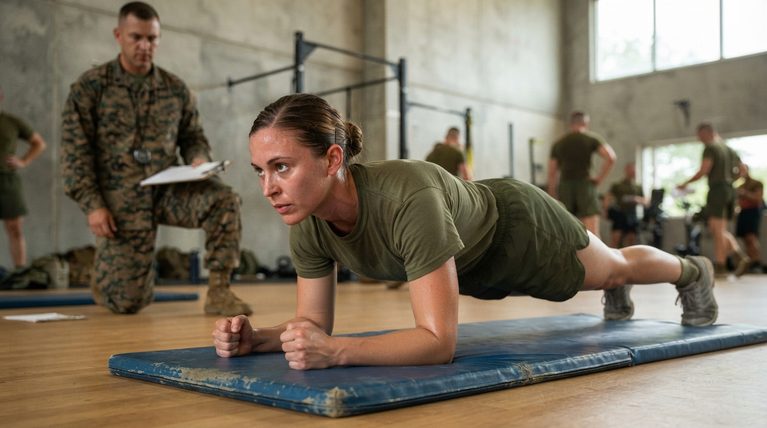
Is there a core-specific event on the CFT like the PFT’s plank? No — the CFT doesn’t include a dedicated core-hold event. Core demand is built into the functional movements themselves, particularly the crawling and carrying components of Maneuver Under Fire.
Check Your CFT Numbers
Run your times and rep counts through the calculator above to see exactly where each of the three events lands you, and which one is worth the most training focus before your next testing window.